#1
Thorough Inspection and Source Identification
Best for: Figuring out where the damage is coming from before spending money
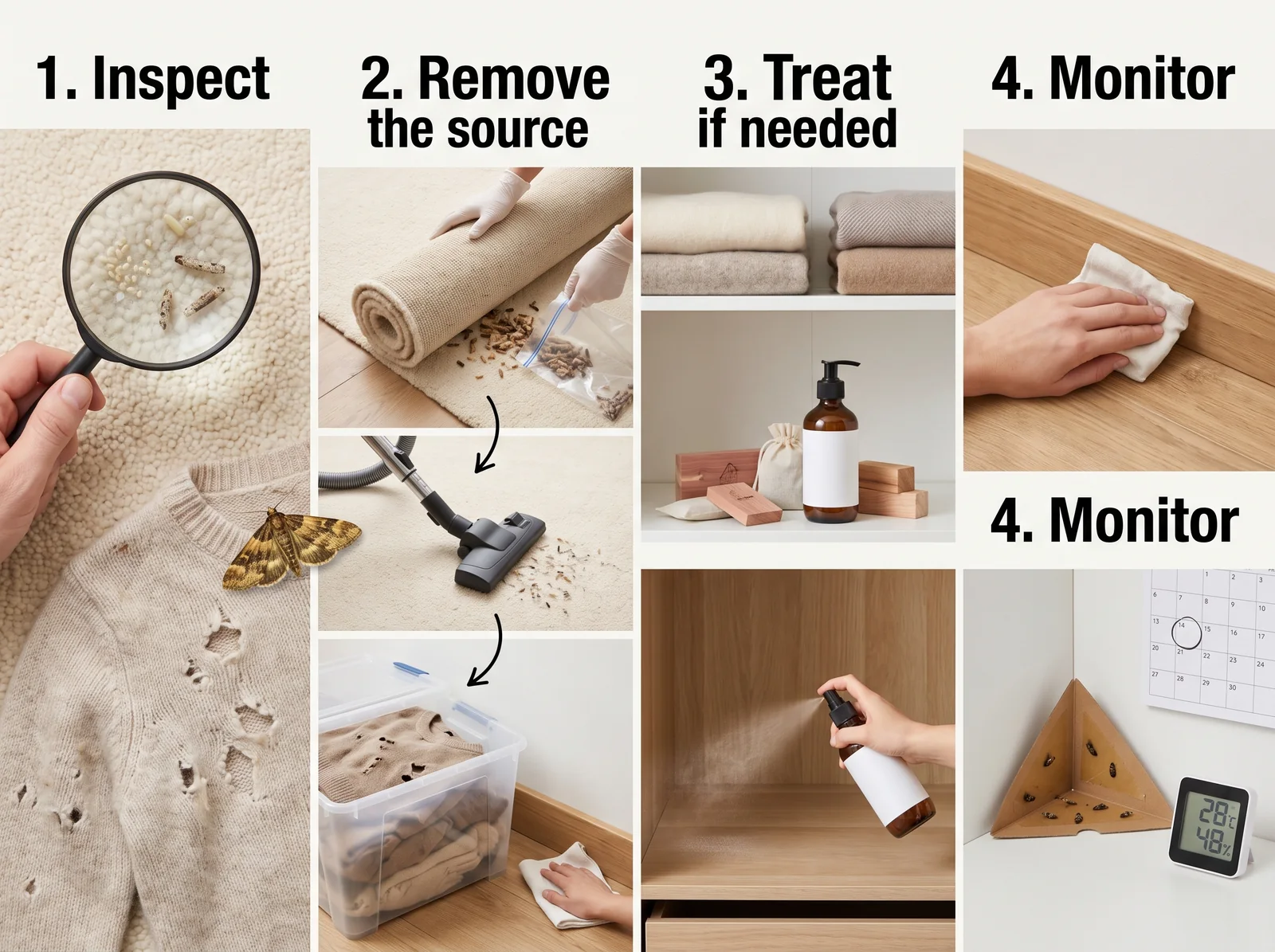
Carpet moth larvae, not the adult moths, do the actual damage. They feed on wool, silk, feathers, and other natural fibers, often in spots you rarely disturb. Check closets, under furniture, inside rolled-up rugs, and along carpet edges with a flashlight.
Look for irregular holes, silky tunnels, or small case-like larvae stuck to fabric. This step costs nothing and tells you whether you're dealing with one damaged sweater or an infestation spread across several rooms.
Useful strengths
- Free and low effort
- No chemicals involved
- Pinpoints exactly where to focus cleaning
- Prevents wasted treatment on the wrong area
Limits to consider
- Takes time to check every space
- Doesn't remove any pests by itself
- May miss larvae hidden in wall voids or under floors
#2
Deep Vacuuming and Fabric Cleaning
Best for: Removing eggs, larvae, and food sources from carpets and closets
Regular, thorough vacuuming physically removes eggs and larvae before they mature. Focus on carpet edges, under heavy furniture, and inside closets since carpet moths prefer undisturbed, dark areas over open, walked-on carpet.
Wash or dry clean infested clothing and linens on the hottest setting the fabric allows. Heat kills eggs and larvae without any pesticide. Empty the vacuum canister outside right after cleaning so anything trapped inside doesn't just crawl back into your home.
Useful strengths
- Low cost and immediate results
- Safe around kids and pets
- Reduces the larvae's food source directly
Limits to consider
- Needs to be repeated regularly
- May not reach larvae deep in padding or seams
- Doesn't stop moths in areas you can't vacuum
#3
Freezing or Heat Treatment for Infested Items
Best for: Small infested items like sweaters, blankets, or stuffed toys
Sealing an infested item in a plastic bag and placing it in a freezer for several days kills eggs, larvae, and adult moths. This works well for delicate items that can't handle hot water or dry cleaning chemicals.
A hot dryer cycle or handheld steamer works the same way for fabric that tolerates heat. Both methods leave no chemical residue and are best used on individual pieces rather than trying to treat an entire room.
Useful strengths
- No chemical residue
- Inexpensive
- Safe for delicate or sentimental fabrics
- Kills all life stages when done properly
Limits to consider
- Only practical for smaller items
- Requires several days of sustained cold or heat
- Not a whole-room solution
#4
Removing and Discarding Heavily Damaged Items
Best for: Textiles too damaged or infested to reasonably save
Some rugs, old blankets, or wool garments may already be too damaged to repair. Bagging them up and discarding them right away removes the largest source of larvae food and breeding material in one step.
This is hard when the item has sentimental value, but a heavily infested piece left in place often reinfests everything else you clean or protect. Check secondhand rugs and inherited textiles for damage before bringing them into your home.
Useful strengths
- Immediate reduction in infestation
- Prevents reinfestation of cleaned items
- Simple, no special tools needed
Limits to consider
- Means losing an item permanently
- Doesn't address larvae that have already spread elsewhere
#5
Airtight Storage and Exclusion Practices
Best for: Protecting clean or treated items for the long term
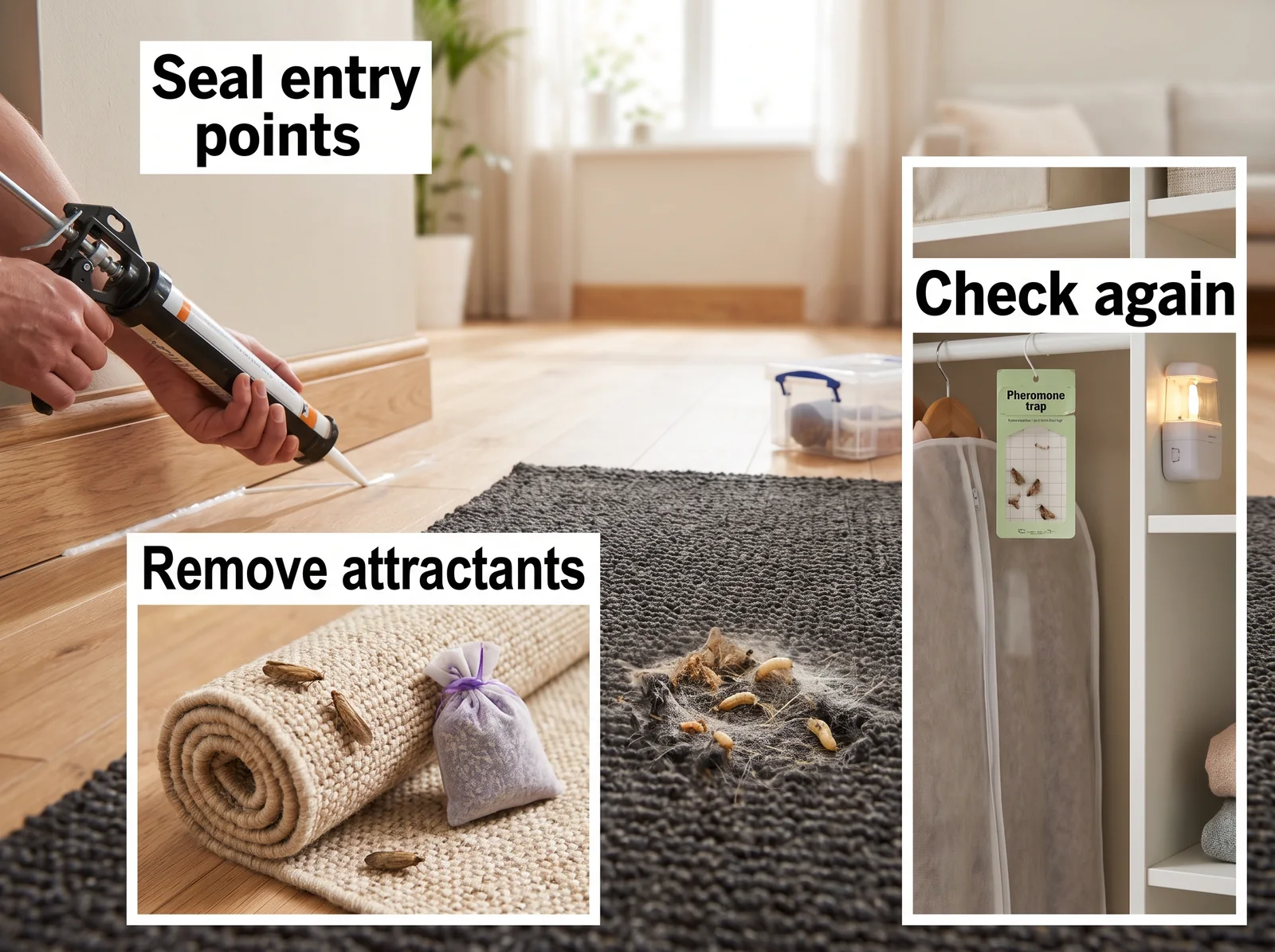
Store out-of-season wool clothing, blankets, and rugs in sealed, airtight containers or garment bags instead of open closets. Larvae need direct access to fibers to feed and lay eggs, so cutting off that access is one of the most effective long-term prevention steps.
Cedar blocks and lavender sachets are often sold as repellents, but they mostly mask odor and don't reliably kill eggs or larvae already present. Airtight storage combined with regular cleaning does more to stop new infestations from starting.
Useful strengths
- Prevents new infestations from starting
- Long-lasting once set up
- No chemicals required
- Low ongoing maintenance
Limits to consider
- Doesn't fix an active infestation on its own
- Requires some upfront cost for storage containers
#6
Pheromone Traps for Monitoring
Best for: Tracking adult moth activity and checking if treatment is working
Sticky traps baited with pheromones attract adult male carpet moths and give you a simple way to see whether activity is increasing or decreasing over time. They're useful for confirming a problem exists before you commit to bigger cleaning or treatment steps.
Traps don't control the infestation on their own because they only catch adult males, not the larvae actually causing fabric damage. Treat them as an early-warning tool rather than a standalone fix.
Useful strengths
- Inexpensive and easy to place
- Helps track infestation trends over time
- No pesticides needed to use them
Limits to consider
- Doesn't reduce the larvae population
- Only monitors, doesn't control
- Traps need periodic replacement
#7
Professional Pest Control Service
Best for: Infestations that keep returning or have spread through multiple rooms
If carpet moths keep showing up despite cleaning and better storage habits, a licensed pest control professional can inspect wall voids, under-floor areas, and other spots that are difficult to check yourself.
Professionals can also confirm whether the infestation is isolated to your space or has spread through connected units, like in an apartment building, and can recommend a treatment plan suited to the extent of the problem.
Useful strengths
- Reaches hidden or hard-to-access infestations
- Professional-level inspection
- Treatment plan tailored to your situation
Limits to consider
- Costs more than DIY approaches
- Requires scheduling and access to your home
- May need follow-up visits to confirm results
#8
EPA-Registered Pesticide Products
Best for: Persistent infestations that haven't responded to non-chemical steps
When larvae and eggs keep returning despite cleaning, freezing, and better storage, an EPA-registered pesticide product labeled for carpet moths or fabric pests may become part of the plan. Look specifically for a label that lists both the pest and the site, like carpets or upholstery.
Always read and follow the complete label, including reentry times and how long to keep children and pets away from treated areas. A product used on the wrong surface, at the wrong strength, or without following label directions can fail to work and create unnecessary risk.
Useful strengths
- Can address large or hidden infestations
- Backed by EPA registration and label testing
- Works alongside cleaning and storage steps
Limits to consider
- Requires exact label compliance
- Not a first step for small or isolated problems
- Some products are better applied by a licensed professional
Why do carpet moths keep coming back after cleaning?
Carpet moths lay eggs deep in fibers, often in spots that don't get disturbed, like under heavy furniture, inside rolled-up rugs, or in closets full of stored wool. A single cleaning pass can miss eggs tucked into these protected areas.
If you clean visible areas but leave an infested item in storage or skip checking under furniture, the larvae there keep developing and spreading. Repeating inspection and cleaning over several weeks catches the next generation before it causes more damage.
What attracts carpet moths to a home in the first place?
Carpet moths need natural fibers like wool, silk, feathers, and fur to feed on. Homes with wool rugs, wool blend carpets, or stored wool clothing give larvae exactly what they need to grow.
Dark, undisturbed areas with little foot traffic, like closets, under beds, and storage boxes, are ideal breeding spots since larvae avoid light and movement. Reducing clutter and improving airflow in these areas makes them less appealing.
How do you know if it's really carpet moths and not another fabric pest?
Carpet moth damage usually shows up as irregular holes in wool or silk items, along with silky tunnels or case-like larvae attached to the fabric. Adult moths are small, tan or golden colored, and tend to avoid light.
If you're not fully sure the damage is from carpet moths, it helps to compare what you're seeing against a reliable pest identification resource before choosing a treatment, since fixes for carpet beetles or other fabric pests can differ.
Questions you may still have
What's the difference between carpet moths and pantry moths?
Carpet moths feed on natural fibers like wool, silk, and feathers, damaging rugs, clothing, and upholstery. Pantry moths feed on stored food like flour, grains, and pet food in kitchen cabinets. The larvae, damage patterns, and treatment locations are different, so it helps to confirm which one you're dealing with before choosing cleaning or storage changes.
Can carpet moths infest synthetic carpet or fabric?
Carpet moth larvae feed on natural fibers, so pure synthetic carpet and fabric are not a food source for them. However, many carpets and rugs are wool blends, and dust, hair, and food residue in synthetic carpet can still support larvae feeding on those materials rather than the carpet itself.
How long does it typically take to get rid of a carpet moth infestation?
A small, caught-early infestation can often be controlled within a few weeks of thorough vacuuming, cleaning, and proper storage. Larger or long-standing infestations, especially ones spread through multiple rooms, can take several months of repeated inspection, cleaning, and sometimes professional treatment to fully resolve.
Do I have to throw away every wool item if I find carpet moth damage?
No. Items with light damage can often be saved by washing, freezing, or dry cleaning to kill eggs and larvae, then storing them in airtight containers. Only items that are severely damaged or too fragile to treat typically need to be discarded to stop the infestation from spreading further.