What do carpet moth larvae look like?
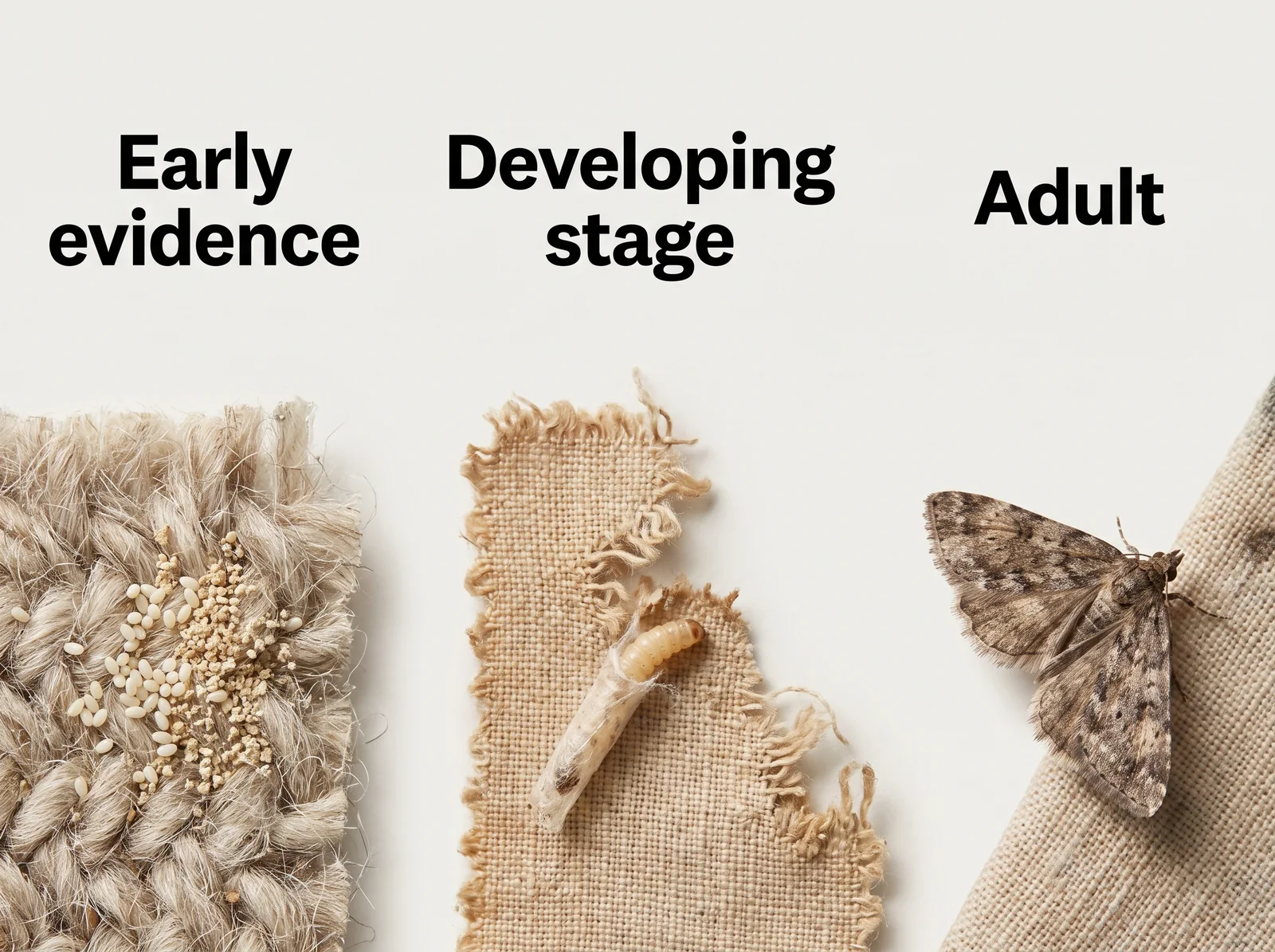
Carpet moth larvae are small, creamy-white caterpillars with dark brown or tan heads. They typically measure less than half an inch long as they mature. Depending on the exact species, they may construct a small, portable silk case that they drag behind them as they feed, or they may spin loose webbing across fiber surfaces.
You rarely see adult moths causing physical damage because only the larvae eat keratin, the protein found in wool, silk, feathers, and hair. Because larvae avoid light, you are most likely to find them resting in dark corners, underneath stationary furniture, or inside undisturbed storage closets.
- Creamy white, caterpillar-like bodies up to a half-inch long
- Small, dark brown head capsules
- Protective silk tubes, cases, or patchy webbing over fibers
Where do larvae hide in your home?
Carpet moth larvae thrive in dark, quiet spots that receive minimal foot traffic. They target natural fibers such as wool rugs, animal hair blends, fur, felt piano keys, and down cushions. Look closely at carpet edges tucked near baseboards and beneath heavy dressers, sofas, and entertainment centers.
They can also spread into closets containing wool coats, blankets, or vintage textiles. Heating vents, floor cracks, and dark subflooring can harbor shed pet hair and lint, which provide an ideal secondary food source for roaming larvae.
How do you inspect for active larvae?
Grab a strong flashlight and inspect the perimeter of your rooms. Pull back rug corners, check underneath furniture legs, and look along room edges. Look for missing patches of pile, threadbare backing, and loose fibers that pull away easily from the floor.
Watch for sand-like droppings called frass, which match the color of the carpet fibers the larvae have eaten. You might also spot discarded pupal cases, sticky webbing, or the active larvae wriggling slowly along the base of the carpet weave.
- Inspect underneath low-clearance furniture and along dark skirting boards
- Check for localized patches of thinning carpet pile or bald spots
- Look for tiny, granular fecal pellets resembling sand grains
What is the best vacuuming strategy?
Intensive vacuuming is your most effective physical tool for eliminating larvae, pupae, and unhatched eggs. Use a strong vacuum with a crevice tool to get deep into floor seams, baseboard cracks, and heating registers. Slowly pass over infested carpets multiple times to pull larvae out of the weave.
If you have area rugs, vacuum both the top surface and the underside, as larvae often feed from the bottom up. Immediately empty the canister or vacuum bag into an airtight trash bag outdoors to prevent captured larvae from crawling back inside.
How do you clean and treat infested textiles?
Any clothing, throw blankets, or removable textiles near the infestation must be cleaned thoroughly. High heat kills all life stages, including eggs and larvae. Wash items in hot water if the fabric care label permits, or place dry items into a clothes dryer on high heat for at least thirty minutes.
For delicate woolens and items that cannot withstand heat, cold treatment is an excellent alternative. Seal the items inside plastic bags, squeeze out excess air, and place them in a deep freezer running at zero degrees Fahrenheit or lower for at least two weeks.
When should you consider chemical controls?
If heavy damage persists after thorough cleaning, vacuuming, and fabric treatment, targeted spot applications may help manage severe infestations. Focus strictly on crack-and-crevice areas, carpet borders, and spaces under large furniture where larvae continue to shelter.
Select only an EPA-registered product specifically labeled for indoor carpet moths and follow every instruction on the label. Avoid over-applying liquid products or spraying clothing, bedding, and food preparation areas.
How can you prevent larvae from returning?
Long-term prevention relies on eliminating dust, pet hair, and organic debris. Maintain a regular cleaning schedule that includes vacuuming behind furniture and beneath floor rugs. Keep high-value wool blankets and seasonal garments sealed in airtight plastic tubs rather than cardboard boxes.
Deploy sticky pheromone traps in closets and corners to catch adult moths before they mate and lay new eggs. While traps do not catch larvae, catching adults alerts you early if a new generation begins to develop.
- Store seasonal wool and silk textiles in airtight, sealed containers
- Regularly clean behind heavy furniture and along baseboards
- Place pheromone monitoring traps to catch adult moths early
Questions you may still have
Can carpet moth larvae bite humans or pets?
No, carpet moth larvae cannot bite people or pets. They do not possess mouthparts capable of piercing skin, and they do not spread diseases. Their sole focus is consuming keratin-rich animal fibers such as wool, fur, and feathers, though their presence can sometimes cause mild contact irritation for sensitive individuals.
How long do carpet moth larvae stay in the larval stage?
The larval stage usually lasts between two months and two years, depending heavily on temperature, humidity, and food availability. In warm, favorable conditions with abundant wool or pet hair, they feed aggressively, grow rapidly, and pupate quickly into adult moths to continue their reproductive cycle.
Will steam cleaning carpets kill all moth larvae?
Steam cleaning can kill larvae and eggs on contact if the steam reaches high temperatures deep inside the carpet pile. However, excess moisture can damage certain wool carpets or encourage mold growth, so ensure the carpet dries quickly and completely after treatment to avoid secondary problems.