Where do carpet moths hide inside your home?
Carpet moth larvae avoid bright light and heavy foot traffic. They thrive under heavy furniture, behind long curtains, along baseboards, and beneath low-profile beds. Wall-to-wall wool carpeting and antique area rugs provide an abundant food source, especially in guest rooms or storage areas that rarely get vacuumed.
Larvae also feed on organic debris that collects in dark floor cracks. Pet hair, human skin flakes, and food crumbs trapped along edge strips give larvae extra nutrients. Checking undisturbed corners and lifting the edges of loose rugs will help you find the primary nesting zones quickly.
- Under sofas, heavy armoires, and low-standing dressers
- Along floor trim, tack strips, and baseboard crevices
- Inside closets containing wool blankets or felt items
- Beneath pet beds and stationary area rugs
What signs confirm an active carpet moth infestation?
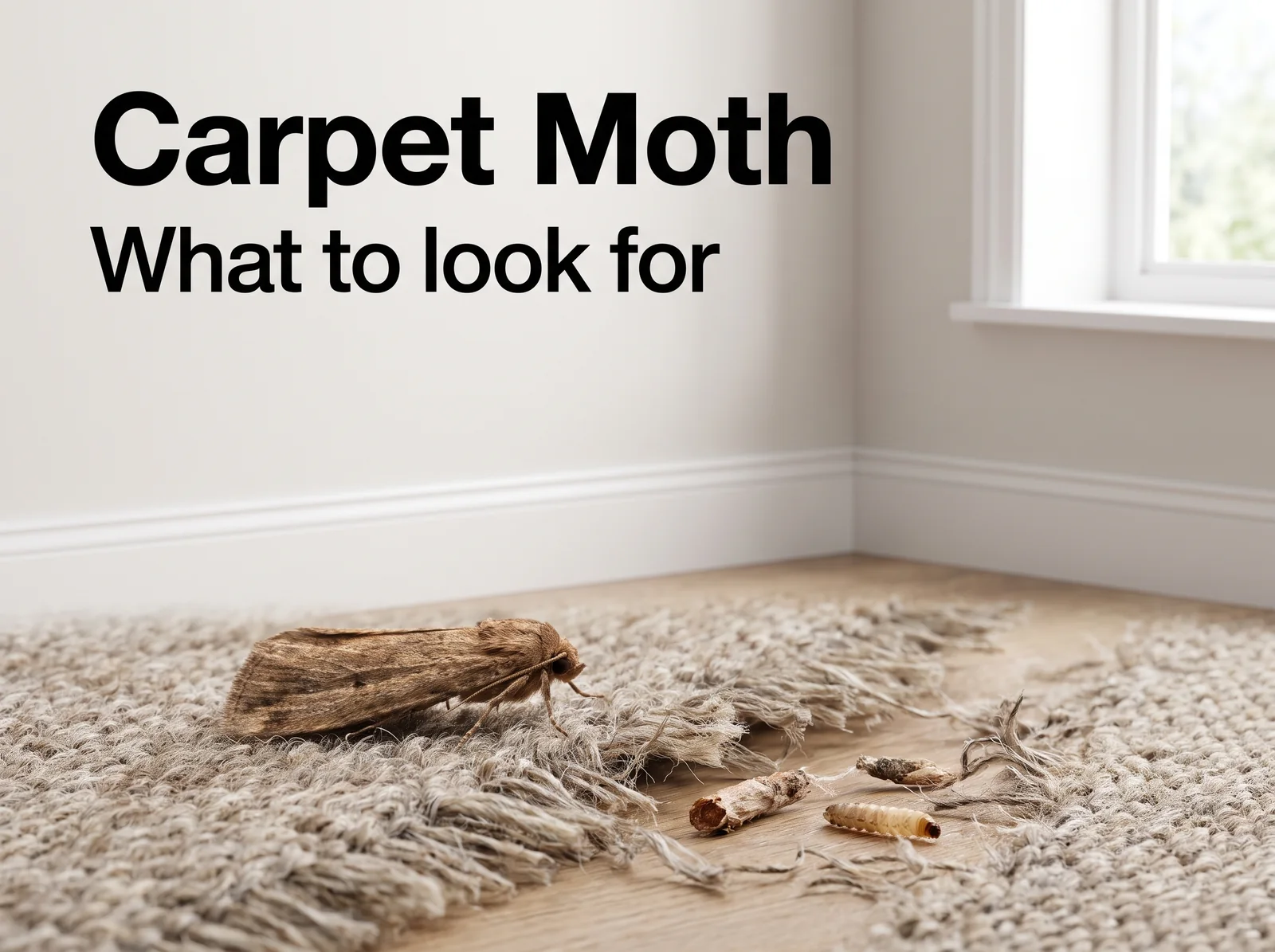
Adult moths are small, buff or brown insects that flutter weakly near floor level rather than flying toward bright ceiling lights. If you notice tiny moths scuttling across your rugs or resting on low walls, larvae are likely feeding nearby.
Physical damage on your floor coverings offers concrete proof. Look for bare patches where pile has been chewed down to the backing. Larvae spin protective silken tubes or cases, leaving behind web-like trails, discarded pupal cases, and tiny sandy droppings known as frass.
- Irregular bare spots on wool carpets or woven rugs
- Silken feeding tubes and fine white webbing on fiber tips
- Granular droppings matching the color of your rug pile
- Small, slow-flying adult moths resting near floorboards
How does deep vacuuming stop carpet moth larvae?
Thorough vacuuming removes adult moths, fragile larvae, and sticky eggs before they can hatch. Use a motorized brush head over open carpet areas, then switch to a narrow crevice tool for baseboards, heating vents, and room corners. Move large furniture items so no floor space remains untouched.
Empty your vacuum immediately after cleaning infested rooms. If you use a bagged vacuum, seal the bag in an airtight plastic trash sack and place it in an outdoor bin right away. For bagless models, wash the canister with hot, soapy water outdoors to remove clinging eggs.
Can heat and steam treatments eliminate hidden moth eggs?
Heat provides an effective way to kill carpet moth eggs and larvae tucked deep into carpet backing. Using a residential steam cleaner delivers high temperatures that penetrate woven fibers where standard vacuum suction might struggle. Move the steamer slowly along edges and under furniture footprints.
Make sure the treated flooring dries completely afterward to prevent mold or mildew growth. For smaller wool rugs, professional dry cleaning or controlled thermal laundering will destroy all life stages without damaging delicate fabrics. Always check manufacturer care tags before applying moisture or high heat to specialty textiles.
How do you protect stored textiles from carpet moths?
Carpet moths easily migrate from flooring into nearby closets, clothing drawers, and linen chests. Before storing spare rugs, wool blankets, or seasonal garments, wash them in hot water or have them dry cleaned. Never store items that carry sweat, body oils, or food residues.
Pack clean textiles into heavy-duty plastic storage bins with tight-fitting rubber gaskets or vacuum-sealed storage bags. Avoid cardboard boxes and breathable fabric bags, as larvae can squeeze through tiny openings or chew through soft paper layers to reach natural materials inside.
What role do pheromone traps play in managing moths?
Pheromone traps use species-specific scents to attract and catch adult male carpet moths on sticky boards. While traps alone cannot eliminate an active population of larvae feeding in floorboards, they serve as an early warning system for renewed activity.
Place traps near floor level in dark, quiet corners where air movement is minimal. Check the sticky pads weekly to see if male moth numbers are dropping. An increase in trapped moths signals that you need to resume vacuuming and inspection in that specific room.
When should you consider EPA-registered pest treatments?
If deep cleaning, steam treatments, and textile isolation fail to clear a severe infestation, you may consider an EPA-registered pesticide. Select only products explicitly labeled for indoor carpet moths and residential floor applications. Read the manufacturer instructions from start to finish before opening the container.
Apply products strictly to listed sites, such as floor perimeters or rug underlays, and never exceed recommended application rates. Keep family members and pets completely away from treated rooms until sprays dry and the area has been fully ventilated according to the product label.
Questions you may still have
Can carpet moth larvae eat synthetic carpet fibers?
Carpet moth larvae cannot digest purely synthetic fibers like nylon or polyester. However, they will chew through synthetic blends if the material contains wool, silk, or feathers. They can also feed on natural pet hair, dead skin cells, and organic food spills trapped deep within fully synthetic carpets.
How long does it take to completely get rid of carpet moths in a house?
Eliminating a carpet moth infestation usually takes between two to six weeks of sustained effort. Because moth eggs hatch over several days to weeks depending on indoor temperatures, you must continue thorough weekly vacuuming and monitoring with sticky traps to catch newly emerging generations before they reproduce.
Does freezing infested wool rugs kill carpet moth eggs?
Yes, freezing kills all stages of carpet moths, including eggs. Place small rugs, pillows, or wool items in sealed plastic bags and keep them in a household freezer set at zero degrees Fahrenheit for at least seventy-two hours. Allow the items to return to room temperature inside the bag to prevent condensation buildup.