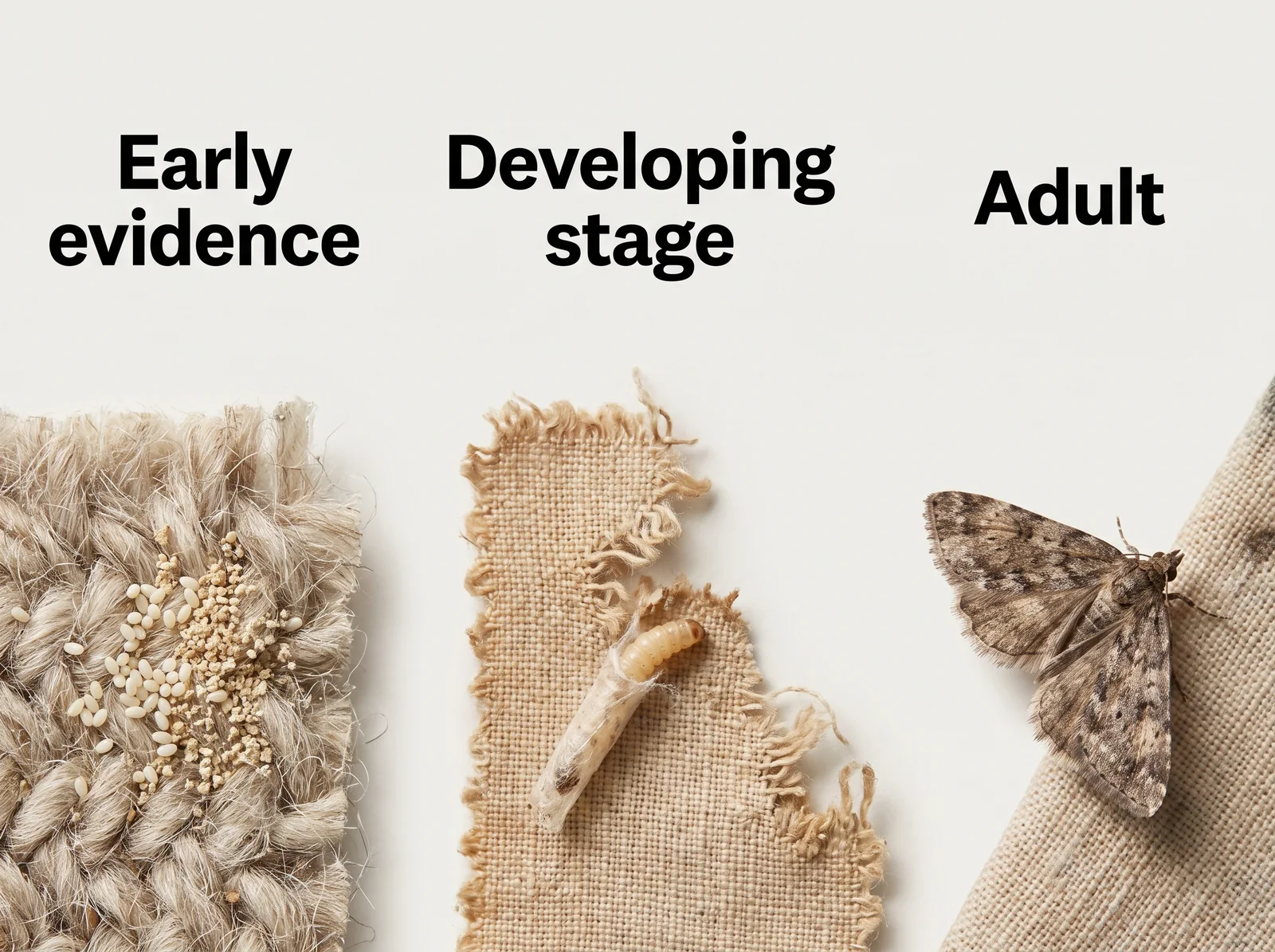
What do carpet moth eggs look like?
Carpet moth eggs are extremely small, usually measuring less than a millimeter in length. They are oval-shaped and have an off-white or translucent color that blends seamlessly into carpet pile, rug backing, and fabric weaves. Because of their tiny size, spotting them with the naked eye is nearly impossible unless you inspect fibers under bright, direct light with a magnifying glass.
Female moths lay hundreds of eggs during their short lifespan, tucking them deep into fibers rather than scattering them on open surfaces. They prefer quiet, undisturbed spots where hatching larvae will have immediate access to keratin, the protein found in natural animal fibers like wool, fur, feathers, and silk.
Where do carpet moths lay their eggs?
Moths avoid bright light and heavy foot traffic, so they seek out dark, secluded spots to lay their eggs. You will typically find egg clusters under heavy furniture like sofas, beds, and bookcases that rarely move. The edges of rooms along baseboards and inside dark closets are also prime targets.
Rugs made of pure wool or wool blends are especially vulnerable, particularly on their undersides or where they sit beneath tables. Stored textiles, vintage tapestries, felt pads, and pet bedding containing animal hair also provide ideal nesting grounds for female moths looking to hide their brood.
How does deep vacuuming remove moth eggs?
Vacuuming is your most effective physical tool for eliminating carpet moth eggs. The suction pulls eggs free from the base of carpet fibers and out of tight crevices along baseboard joints. To get the best results, use a vacuum with strong suction and a motorized brush head that agitates deep pile.
Focus on narrow edges by using a crevice tool along the perimeter of the room. Move heavy furniture completely to vacuum the flooring underneath. When you finish, immediately seal the vacuum bag in a plastic trash bag and dispose of it in an outdoor bin so trapped eggs do not hatch inside your home.
Can steam cleaning kill carpet moth eggs?
Heat is lethal to carpet moth eggs at all stages of development. Steam cleaning delivers high temperatures directly into carpet backing and thick fibers where eggs lodge. A standard steam cleaner that produces hot vapor above 120 degrees Fahrenheit will destroy both eggs and newly hatched larvae on contact.
When using a steam cleaner, move slowly across the surface to ensure the heat penetrates deep into the base material. Make sure the room has good airflow afterward to let the carpet dry completely. Leaving excess moisture behind can encourage mold growth, which creates additional household problems.
How do you treat loose rugs and stored fabrics?
If you have wool rugs, blankets, or vintage clothing carrying moth eggs, temperature treatments offer a safe way to sanitize them without harsh chemicals. Washing washable fabrics in hot water for at least thirty minutes kills eggs immediately. You can also run dry items through a clothes dryer on high heat for half an hour.
For delicate fabrics or small rugs that cannot handle high heat, freezing is a reliable alternative. Place the items inside sealed plastic bags to protect against moisture, then keep them in a household freezer set at zero degrees Fahrenheit for at least two weeks. This prolonged cold destroys hidden eggs entirely.
What role do pheromone traps play?
Pheromone traps do not catch or kill carpet moth eggs directly, but they are essential tools for monitoring your home. These sticky traps release synthetic female moth scents that attract and trap flying male moths. By catching adult males, you reduce the chances of fertilization and new egg laying.
Placing traps in quiet corners, closets, and near vulnerable rugs helps you measure how well your cleanup efforts are working. If you notice a sudden increase in trapped adults, it signals that an undetected batch of eggs has recently hatched, telling you exactly where to concentrate your next cleaning session.
How can you prevent new eggs from settling?
Preventing future infestations requires routine cleaning and smart storage habits. Brush and air out wool rugs regularly, making sure to vacuum underneath furniture during your normal household cleaning routine. Keeping floors free from hair, pet fur, and food crumbs deprives young larvae of secondary food sources.
When storing valuable woolens, seasonal blankets, or vintage rugs, clean them thoroughly first. Store items inside airtight containers or heavy-duty zippered garment bags rather than cardboard boxes. Sealing natural fibers away ensures adult moths cannot access the material to deposit a fresh layer of eggs.
Questions you may still have
Can regular carpet shampooers destroy moth eggs?
Standard carpet shampooing machines use warm water and detergent, which helps lift debris and some eggs through suction, but the water temperature is often not hot enough to kill eggs on contact. For total thermal control, a dedicated high-temperature steam cleaner or professional hot-water extraction service is much more reliable.
Do mothballs destroy carpet moth eggs?
Mothballs can kill eggs, but only when used inside airtight, sealed containers over an extended period where toxic vapors reach high concentrations. They are ineffective and hazardous when placed openly in living areas, under furniture, or across open carpets, and their chemical fumes linger heavily in household air.
How long does it take for carpet moth eggs to hatch?
Under normal indoor conditions of warm temperatures and moderate humidity, carpet moth eggs typically hatch within four to ten days. In cooler rooms or during winter months, the incubation period can slow down, taking up to three weeks before the destructive larvae emerge to feed on surrounding fibers.