Where should your fast inspection begin?
Carpet moth larvae thrive in dark, undisturbed areas where natural keratin is plentiful. Start your search beneath large furniture, along baseboards, in dark corners of closets, and under rugs made of wool, silk, or mixed animal hair.
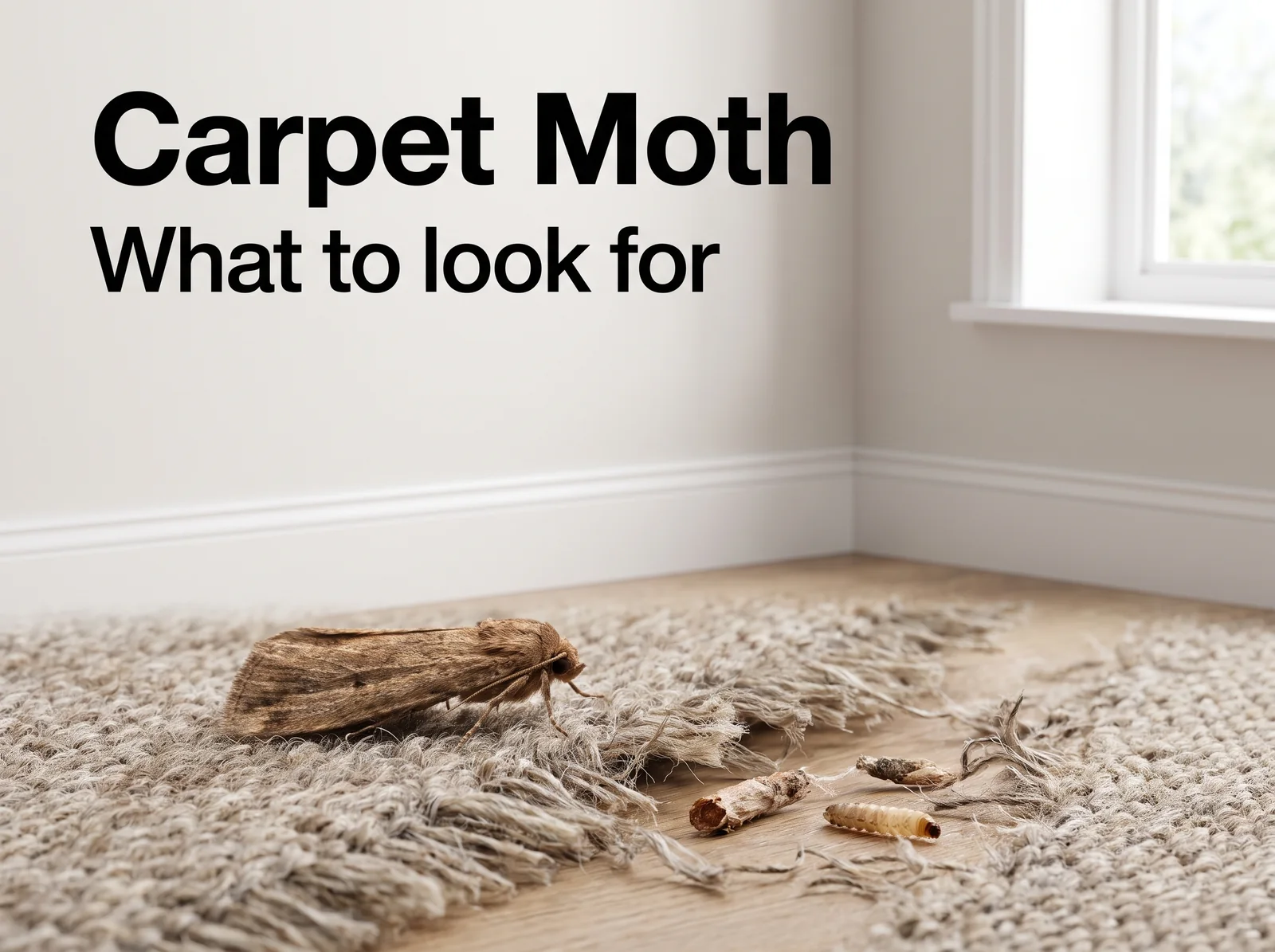
Look for tiny white caterpillars, silken tubes, gritty sand-like droppings, and patchy bare spots on the pile. Adult moths do not fly well and often scurry across the floor instead of fluttering around lights.
Check adjacent baseboard crevices and wool clothing in nearby storage chests, as larvae frequently spread into neighboring fiber sources.
- Pull sofas, bookcases, and heavy cabinets away from walls to inspect hidden floor sections.
- Roll back wool rugs to check both the pile and the backing for webbing.
- Inspect quiet closet floors and edges where vacuum cleaners rarely reach.
How does deep vacuuming stop active damage immediately?
Intensive vacuuming is your fastest physical weapon against an active infestation. Running a vacuum equipped with a motorized brush roll and a crevice tool pulls out live larvae, delicate pupal cases, loose fibers, and fragile eggs.
Take your time along every floor seam, baseboard gap, and carpet edge. Pay special attention to the transition strips between rooms, as larvae often wedge themselves beneath metal or wooden thresholds.
Empty your canister or remove the vacuum bag immediately after finishing. Seal the contents in a plastic trash bag and take it directly to an outdoor garbage bin so escaping larvae cannot crawl back indoors.
Can heat and cold treatments speed up elimination?
Temperature extremes provide quick, non-chemical elimination for infested items that you can safely move. Larvae and eggs cannot survive sustained high heat or freezing conditions.
Wash smaller wool rugs, throws, and vintage textiles in hot water if the fabric care label permits, or place dry items in a clothes dryer on high heat for at least thirty minutes.
For delicate fabrics that cannot tolerate heat, wrap them tightly in plastic bags, squeeze out excess air, and place them in a home freezer set to zero degrees Fahrenheit for at least four days.
- Use high heat for thirty minutes on dryer-safe woolens and blankets.
- Freeze fragile or antique items in sealed plastic bags for four continuous days.
- Utilize a professional carpet cleaner or hot-water extractor to treat glued-down carpeting.
What role do pheromone traps play in rapid control?
Pheromone traps are designed to capture male adult moths using targeted female scent lures. Setting them up immediately helps break the mating cycle and reduces the number of fertilized eggs laid in your floor coverings.
Place traps on or near the floor in low-light zones where you have noticed insect activity. Avoid placing them near drafty windows or heating vents, which disperse the scent unevenly and reduce their pull.
Remember that sticky traps catch flying or crawling adults, not feeding larvae. Use them as an early warning system and a tracker to see whether your sanitation efforts are working.
How should you sanitize the surrounding space?
Moth larvae need hair, skin flakes, food residue, and organic dust to thrive alongside natural wool fibers. Washing hard surfaces around your floor stops them from finding alternate food sources.
Wipe down baseboards, under-bed storage zones, and lower wardrobe shelves with warm, soapy water. A microfiber cloth picks up stray hair and lint that ordinary sweeping leaves behind.
If you store wool garments or spare carpet remnants, pack them into airtight plastic storage totes with tight gaskets rather than cardboard boxes or fabric bins that larvae can easily enter.
When is an insecticidal treatment appropriate?
When carpet damage is widespread or larvae have spread into inaccessible subflooring gaps, a targeted pesticide treatment may help bring numbers down.
Select only an EPA-registered product that explicitly lists carpet moths or clothes moths on its container label and is approved for residential indoor flooring. Follow all application steps, safety precautions, and drying times precisely.
Never apply products broadly across open living spaces if the infestation is confined to localized edges. Direct spot treatments to carpet margins, perimeter tracks, and floor crevices according to the packaging directions.
How do you ensure carpet moths do not return?
Achieving rapid elimination is only the first half of the process; keeping moths away requires ongoing maintenance. Continue your high-frequency vacuuming schedule weekly for at least two months after the last moth sighting.
Move furniture periodically so light and airflow reach vulnerable carpet areas. Larvae dislike disturbance and actively avoid bright, frequently cleaned living spaces.
Inspect secondhand wool rugs, upholstered furniture, and vintage textiles carefully before bringing them into your home to prevent introducing a fresh population.
Questions you may still have
Can carpet moths bite people or pets?
No, carpet moths do not bite humans or domestic animals. They do not possess mouthparts capable of puncturing skin, nor do they spread infectious diseases. Their sole threat is structural damage to natural materials, including wool, fur, feathers, and silk.
How quickly do carpet moth eggs hatch?
Carpet moth eggs typically hatch within four to ten days in warm indoor temperatures. In cooler conditions, incubation can take several weeks. This quick incubation cycle is why swift vacuuming and temperature treatments are vital to disrupt reproduction before new larvae emerge.
Will regular steam cleaning ruin my wool carpets while killing moths?
Professional steam cleaning or controlled hot-water extraction kills larvae and eggs on contact without ruining quality wool rugs when performed properly. Always avoid over-saturating the carpet backing and ensure rapid, thorough drying to prevent mold growth or fiber shrinkage.