Why do carpet moths target natural fibers?
Carpet moths are attracted to natural animal fibers containing keratin. This protein is present in wool rugs, silk blends, feather-filled cushions, leather, and animal hair. Adult moths do not cause damage because they lack functional mouthparts, but they lay eggs in dark, quiet corners where larvae can feed uninterrupted.
Larvae need more than just raw fibers to thrive. They prefer textiles soiled with perspiration, body oils, beverage spills, or food residues, which provide essential micronutrients. Synthetic carpets made entirely of nylon or polyester resist damage unless they hold heavy amounts of pet dander, lint, or organic soil.
Where should you look for hidden larvae?
Carpet moth larvae avoid bright light, meaning infestations usually start out of sight. Begin your inspection by checking underneath heavy furniture like sofas, bookcases, and entertainment centers. Inspect the perimeter along baseboards and inside dark closets where floor rugs extend into corners.
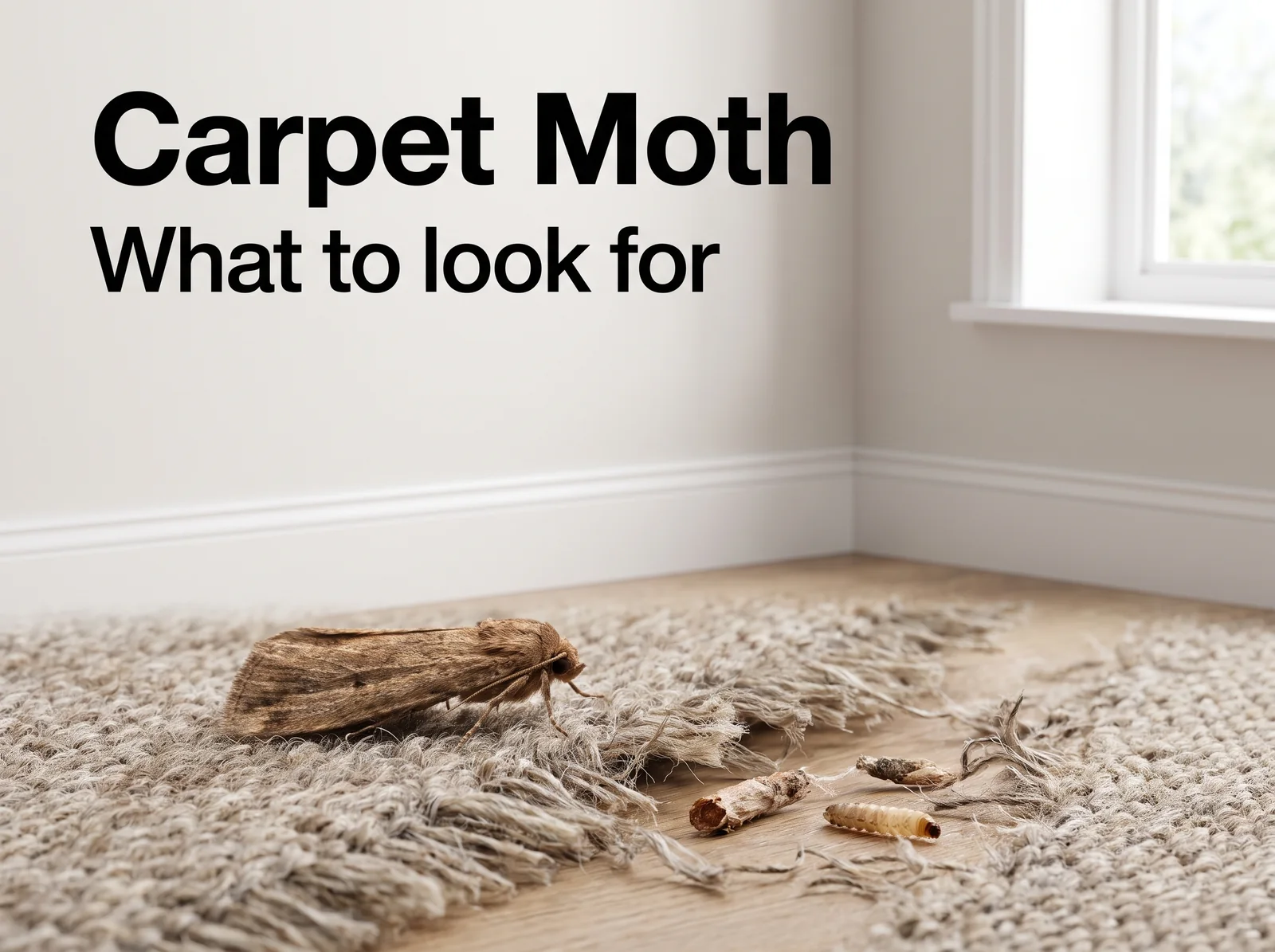
Pull back the edges of area rugs and examine both the top pile and the woven backing. Look for silky tubes, webbed patches, sandy larval droppings, and bald spots where pile fibers have been severed at the root.
How does deep vacuuming eliminate active pests?
Frequent, thorough vacuuming is your most powerful mechanical tool against carpet moths. Vacuuming removes eggs, webbing, feeding larvae, and the hair or dander that feeds them. Standard surface sweeping is not enough; you must use focused suction along every edge.
Use a crevice attachment to work deeply along baseboards, heating vents, and under heavy furniture. Go over high-risk areas slowly in multiple directions to pull embedded debris out of the fibers.
- Vacuum both the front and underside of wool rugs.
- Empty your vacuum canister or dispose of the bag outside immediately after cleaning.
- Wipe baseboards and bare floor edges with warm, soapy water after vacuuming.
Can heat and cold treatments kill moth eggs?
Extreme temperatures kill all stages of carpet moths, including hidden eggs that resist light brushing. If you have washable wool blankets, slipcovers, or small decorative mats, run them through a hot wash cycle followed by thirty minutes on high heat in the dryer if fabric labels allow.
For delicate fabrics or small rugs that cannot handle high heat, freezing is an effective alternative. Seal the clean, dry items securely inside plastic bags to prevent moisture damage and place them in a home freezer set at zero degrees Fahrenheit for at least seventy-two hours.
How do natural deterrents protect cleaned areas?
Once an area is clean, natural botanical scents can help deter adult moths from returning to lay eggs. Essential oils such as cedarwood, lavender, rosemary, and clove emit aromas that adult moths actively avoid when seeking nesting grounds.
Apply these deterrents by placing aromatic cedar blocks, dried herb sachets, or drops of pure essential oil on cotton balls inside closets and under furniture. Remember that botanical scents repel adults but will not kill existing eggs or feeding larvae already embedded in the rug.
How do pheromone traps help track progress?
Pheromone traps are essential for monitoring carpet moth activity without using toxic sprays. These traps use female moth scent attractants on a sticky surface to capture flying adult males, preventing them from mating and revealing the location of active breeding clusters.
Place traps in low-light areas near floor level, keeping them away from open windows or drafty doors that might disperse the scent. Check the sticky pads weekly to see if numbers are dropping, which confirms that your cleaning efforts are breaking the breeding cycle.
What long-term habits prevent future infestations?
Preventing future carpet moth problems requires ongoing fabric maintenance and regular floor sanitation. Move furniture twice a year to expose dark rug areas to light and air, which discourages moths from settling. Brush and vacuum pets regularly to minimize shedding that collects along floor trim.
Store unused woolens, heirloom rugs, and natural fiber blankets in airtight plastic containers or sealed vacuum bags rather than open cardboard boxes. Inspect second-hand rugs or antique furniture thoroughly before bringing them into your living spaces.
Questions you may still have
Can steam cleaning eliminate carpet moth larvae?
Yes, high-temperature steam cleaning kills carpet moth eggs, larvae, and pupae on contact while removing the organic grime they feed on. Ensure the steam reaches the base of the carpet pile and allow the fibers to dry completely to prevent mold growth.
Does direct sunlight help remove carpet moths from rugs?
Carpet moth larvae dislike bright light and dry conditions. Taking infested area rugs outside on a warm, sunny day, beating them to dislodge debris, and leaving them in direct sunlight for several hours helps eliminate larvae and exposes hidden damage.
How long does it take to fully eliminate carpet moths naturally?
Complete natural eradication typically takes six to twelve weeks. Because pupae can remain dormant and eggs hatch at different intervals, you must continue weekly deep vacuuming, hot laundering, and trap monitoring until no new adults appear for two full life cycles.