Why are carpet moths so common in New Zealand homes?
New Zealand homes often provide the exact environment carpet moths love. Pure wool and wool-blend carpets are popular choices across the country, giving larvae an abundant supply of animal-derived keratin to consume. When combined with coastal humidity and moderate indoor temperatures, these textiles become prime breeding grounds.
Moths also exploit quiet, undisturbed zones that do not get frequent foot traffic. Areas beneath low furniture, behind heavy drapes, and inside wardrobe corners stay dark and sheltered. Without regular disruption, a few stray adults can quickly establish a breeding colony that goes unnoticed until bare patches appear.
What signs indicate an active carpet moth infestation?
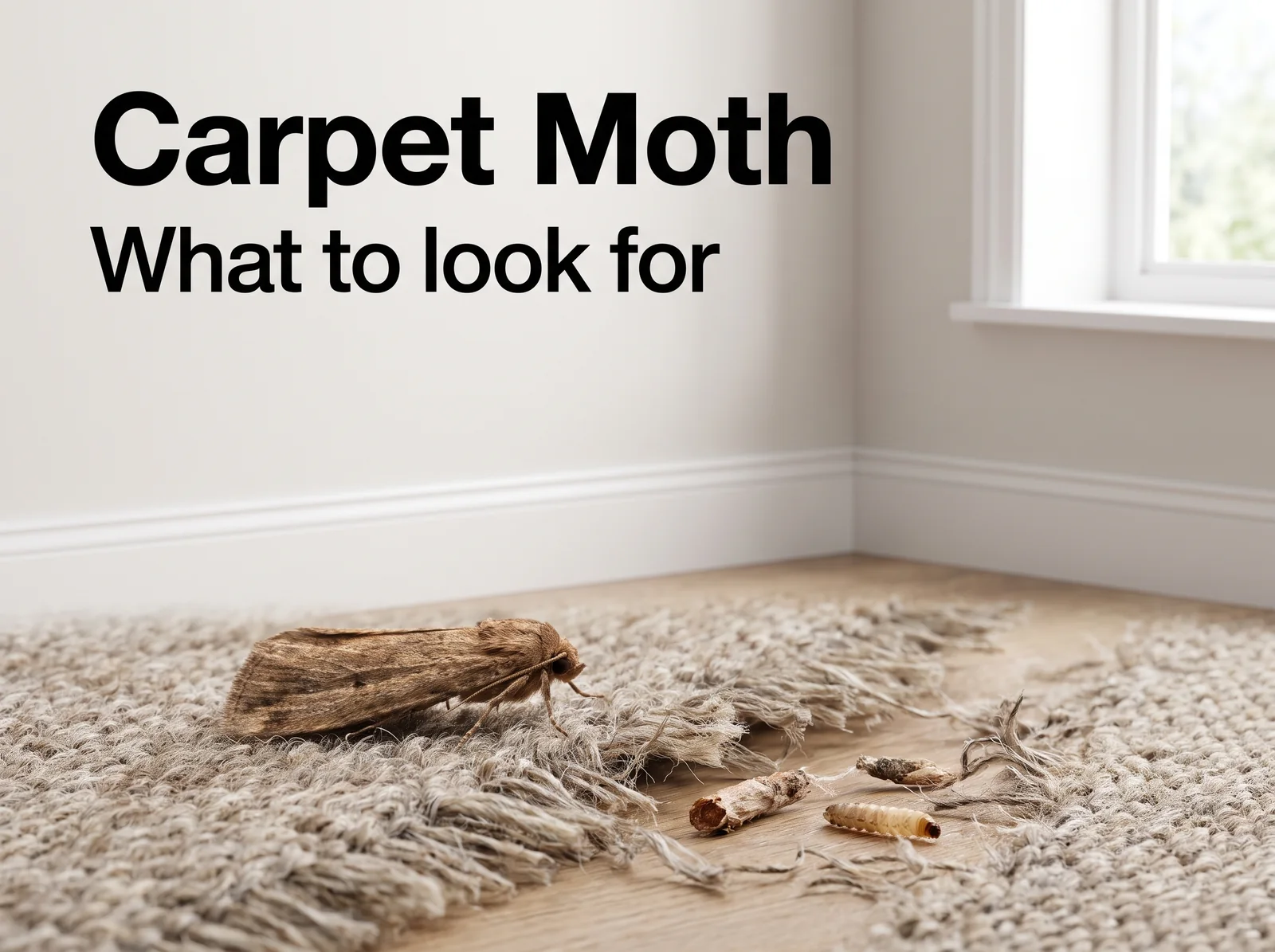
Adult moths are small, buff or brown insects that tend to scurry or flutter close to the floor rather than fly toward light fixtures. Seeing them near baseboards is often the first visual warning that larvae are feeding nearby. However, the larvae themselves cause the actual damage to your floor coverings.
You should watch for patchy thinning, loose carpet fibers, and tiny cylindrical silken cases stuck to yarn tufts. Larvae also leave behind fine, granular droppings that resemble sand or coarse dust. If you lift rug edges and see webbing or missing pile, you have an active problem that needs attention.
How do you vacuum effectively to remove larvae and eggs?
Vacuuming is your primary mechanical defense against carpet pests, but a quick surface sweep will not solve the issue. You need to move heavy sofas, beds, and storage units to reach the hidden fibers where eggs and larvae sit. Concentrate your suction along baseboards, heating vents, and closet perimeters.
Use a crevice nozzle to pull debris from deep within the carpet pile and along room edges. Empty your vacuum canister or dispose of the vacuum bag in an outdoor bin right away so surviving larvae cannot crawl back out.
- Shift furniture completely away from walls before cleaning.
- Use slow, overlapping passes with strong nozzle suction.
- Seal and discard vacuum waste in outdoor bins immediately.
Can heat, cold, and washing save infested wool items?
Temperature extremes provide a reliable, chemical-free way to eliminate eggs and larvae hiding in rugs, blankets, or removable textiles. Washing items in hot water above 50 degrees Celsius for at least twenty minutes destroys all life stages. For delicate wool garments or small rugs, professional dry cleaning is a safer alternative.
Freezing works well for items that cannot tolerate high heat. Place the infested woolens in sealed plastic bags to prevent moisture damage and leave them in a deep freezer for at least seventy-two hours. Once thawed, brush the items thoroughly outside to dislodge dead debris.
How can you monitor and trap adult moths?
Pheromone traps are valuable tools for detecting adult activity and measuring whether your control efforts are working. These sticky traps release natural female scents that attract male moths, catching them on a glue board. Place traps near floor level in dim corners and inside storage closets.
Keep in mind that sticky traps only catch adult flyers; they do not kill larvae or eggs embedded in your carpet pile. Use trap catch counts to locate hot spots in your home and to confirm that numbers are dropping after you clean.
When should you consider pesticide options?
If deep cleaning and physical removal do not halt fiber loss, targeted surface treatments can provide an added layer of control. Always choose an approved, registered product labeled specifically for carpet pests and indoor residential use. Never apply garden sprays or unverified mixtures inside your living areas.
Read and follow the entire manufacturer label carefully before application, paying close attention to drying times and ventilation requirements. Treat only the affected perimeter edges and underside of rugs where larvae feed, rather than soaking open, high-traffic spaces.
What long-term habits prevent carpet moths from returning?
Preventing future infestations requires eliminating moisture, dust, and accumulated pet hair that larvae use as secondary food. Increase airflow through your home on dry days and consider running a dehumidifier in damp rooms, as lower humidity slows insect development.
Make a habit of shifting rugs and moving furniture during seasonal cleaning routines. Store out-of-season wool clothing, blankets, and spare rugs in airtight plastic containers rather than open cardboard boxes, ensuring fabrics are thoroughly cleaned before storage.
Questions you may still have
Do carpet moths bite humans or pets?
No, carpet moths do not bite humans or pets, nor do they carry infectious diseases. Their mouthparts are built only to consume keratin-rich natural fibers like wool, silk, feathers, and animal hair. While they are completely harmless to your skin, their feeding habits cause permanent structural damage to household fabrics and floor coverings.
Why do carpet moths prefer natural wool over synthetic carpets?
Carpet moth larvae require keratin, an animal protein found in natural fibers like wool, hair, down, and fur, to grow and complete their lifecycle. Pure synthetic carpets made from nylon or polyester do not contain these proteins, so larvae cannot feed on them unless the synthetic fibers are heavily soiled with food spills, sweat, or pet hair.
Can steam cleaning kill carpet moth eggs instantly?
Yes, professional hot water extraction and high-temperature steam cleaning effectively kill carpet moth eggs and larvae on contact. The steam must reach deep into the base of the carpet pile to be fully effective. Make sure the carpet dries thoroughly afterward, as lingering dampness can encourage mold or create favorable conditions for other household pests.