Why do carpet moths keep coming back?
Carpet moths often return because cleaning routines miss the tiny, sticky eggs embedded deep inside carpet pile. Adult moths do not feed on your rugs, but they seek out dark, quiet spots under heavy couches, beds, and baseboards to lay hundreds of eggs. If you only treat the surface or kill the flying adults, a new batch of larvae hatches weeks later.
Larvae feed on keratin, a natural protein found in wool, silk, feathers, and animal hair. They thrive in areas that collect pet dander, lint, and food spills, which provide extra nutrients. Unless you eliminate every food source and address hidden egg sites, the cycle simply repeats.
How do you locate the primary breeding zones?
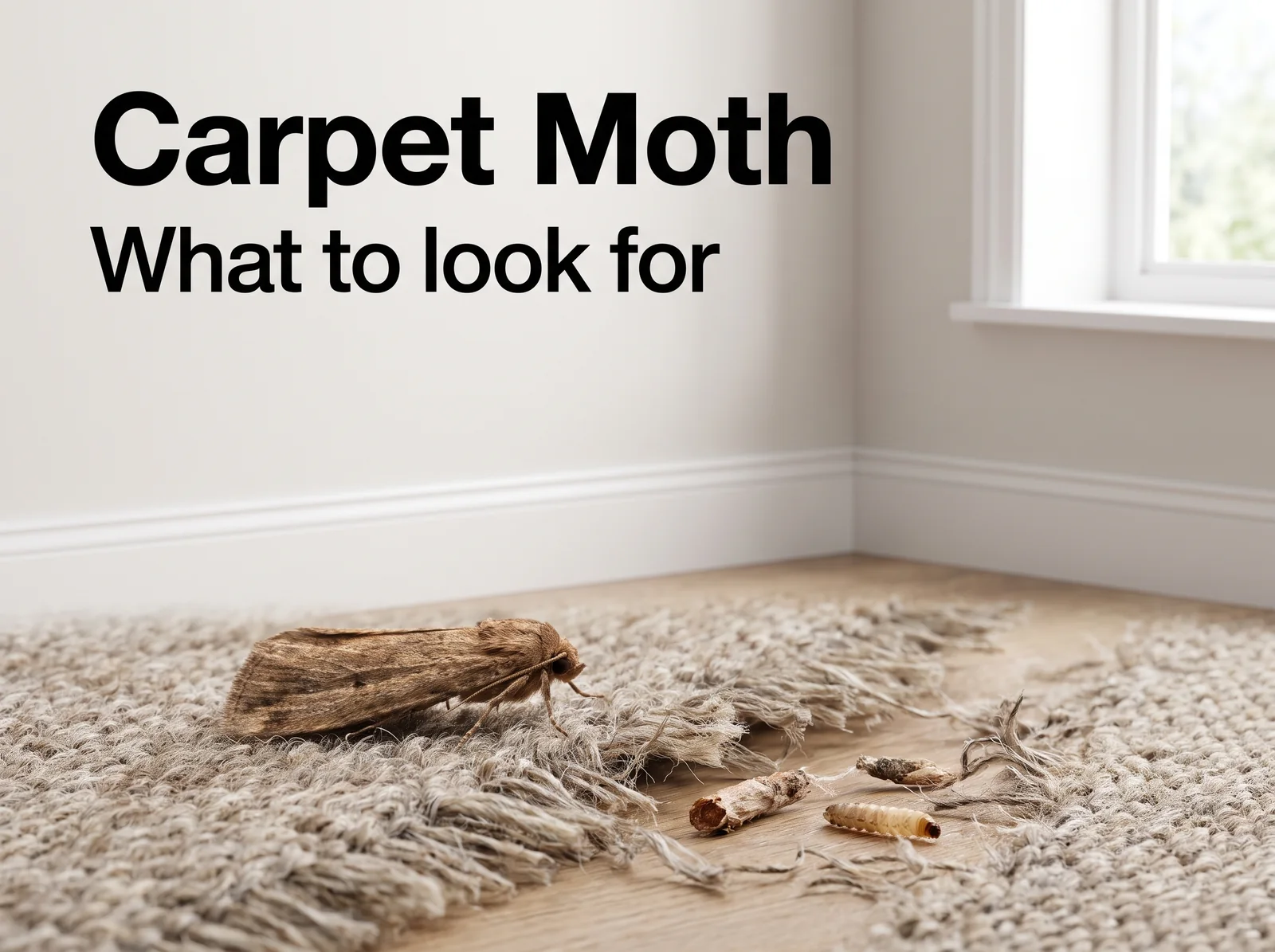
Finding the main breeding cluster requires inspecting the darkest, least disturbed areas in your home. Check beneath low-profile furniture, inside wool rug fringes, behind floor-length curtains, and along baseboard crevices. You are looking for irregular bare patches, silken feeding tubes, small webbed cases, or sand-like droppings.
Use a bright flashlight to inspect room perimeters and pull back area rugs to examine the underside backing. Larvae frequently chew through the bottom warp threads where vacuum cleaners never reach.
- Underneath heavy wardrobes, bookcases, and sofas
- Along floor edges and behind baseboard gaps
- The underside and backing of wool or silk area rugs
- Closet floors holding stored natural-fiber textiles
What vacuuming methods actually break the cycle?
Standard surface vacuuming is not enough to pull out carpet moth eggs and webbing. You must use a vacuum with strong suction and a dedicated crevice attachment. Slowly work the tool along baseboards, into carpet seams, and under all furniture legs to physically dislodge eggs clinging to the base fibers.
Empty your vacuum canister or dispose of the bag outside immediately after every session. Seal the debris inside a heavy plastic bag so larvae cannot crawl back into your living space. Repeat this intensive vacuuming twice a week for at least a month.
Can heat, steam, or freezing eliminate hidden larvae?
Temperature extremes provide a reliable non-chemical way to kill carpet moth larvae and eggs on contact. Professional steam cleaning drives moist heat deep into wool pile, effectively destroying pests that vacuuming leaves behind. Make sure the carpet dries completely afterward, as lingering dampness can invite other pests.
For smaller items like wool throw pillows, small rugs, or folded blankets, you can use cold treatment. Place items in sealed plastic bags and freeze them at zero degrees Fahrenheit for at least seventy-two hours. Allow the items to return to room temperature slowly before unpacking.
How do pheromone traps help prevent future damage?
Pheromone traps are essential tools for long-term control because they reveal whether breeding adults are still active in your home. These sticky traps release a synthetic female scent that lures male moths, interrupting the mating cycle before new eggs are deposited.
Place traps at floor level or on low shelves away from strong drafts, open windows, and bright lights. Traps alone will not clear a heavy infestation, but checking them weekly shows you if your cleaning efforts worked or if a pocket of larvae remains active.
When should you apply targeted treatments?
If heavy damage persists despite thorough vacuuming, steaming, and laundering, spot treatments may be helpful. Focus solely on infested floor edges, rug perimeters, and cracks beneath baseboards rather than spraying wide, open living areas.
Select only an EPA-registered product specifically labeled for indoor carpet and clothes moths, and follow all package instructions precisely. Apply treatments only where larvae actively feed, allowing surfaces to dry completely before replacing furniture.
How do you protect your wool and rugs long term?
Permanent protection comes down to regular home maintenance and smart storage. Move furniture slightly during routine cleanings so light and airflow reach vulnerable carpet areas. Brush and vacuum wool rugs frequently to disturb any newly arrived insects before they settle.
Before storing wool blankets, antique tapestries, or seasonal rugs, wash or dry-clean them thoroughly to remove perspiration, food oils, and dander. Store cleaned items inside airtight plastic bins or zippered garment bags rather than cardboard boxes, which moths can easily penetrate.
Questions you may still have
How long can carpet moth larvae survive without feeding?
Carpet moth larvae can survive for several months in cool, undisturbed conditions, especially if small traces of hair or lint are present. Under poor conditions, their development slows significantly, allowing them to remain dormant in baseboards until warmer weather arrives.
Do natural repellents like cedar or lavender kill carpet moths?
Cedar oil and lavender act only as mild deterrents to adult moths; they do not kill existing eggs or active feeding larvae. Relying solely on scents will not stop an active infestation once larvae are settled inside your carpet pile.
Can carpet moths spread to my pantry or kitchen cabinets?
No, carpet moths are fabric pests that feed on animal proteins like wool and fur. They do not consume grains or dry food, though separate pantry moth species can infest your kitchen cereals, flour, and dried goods.