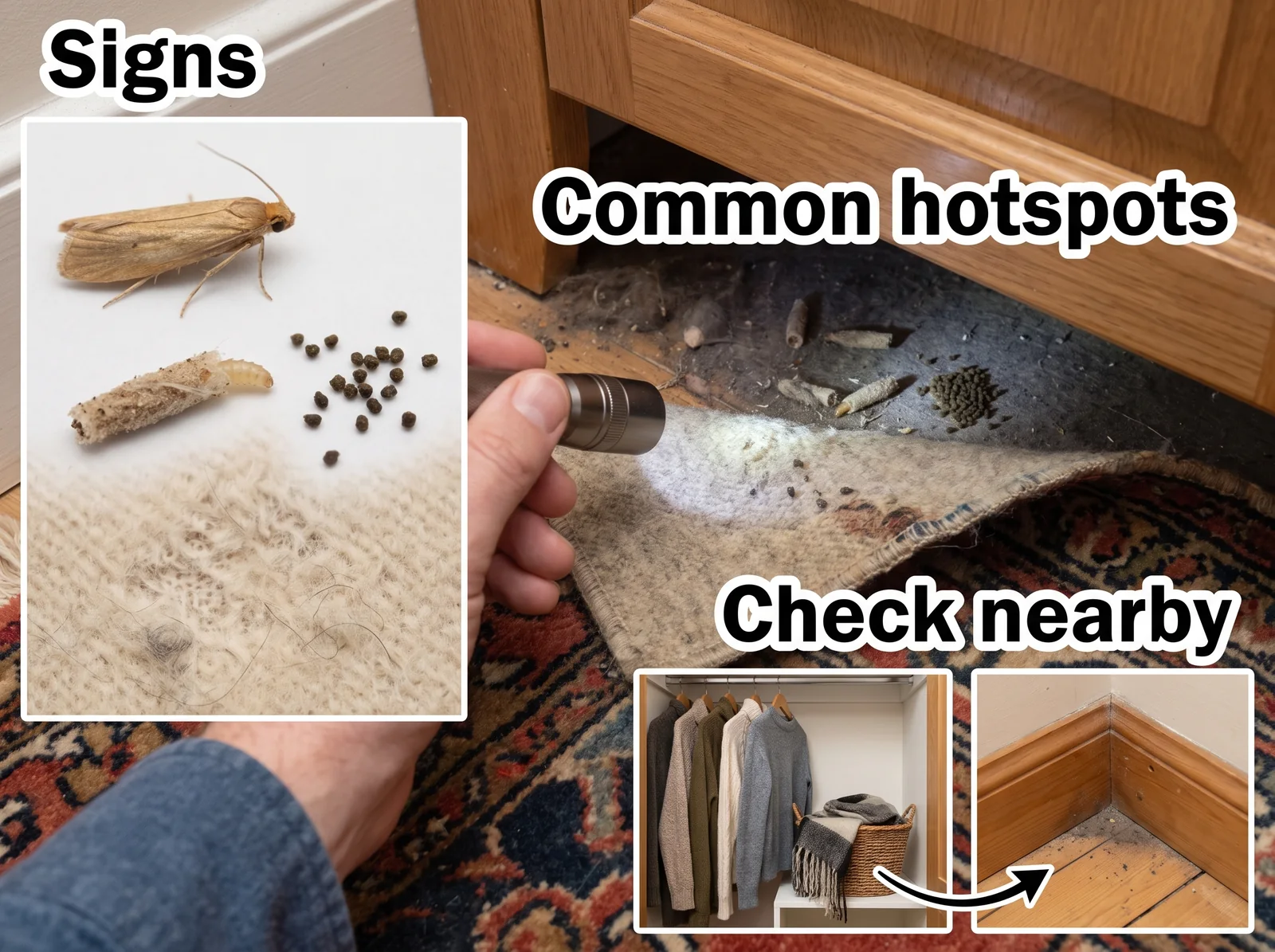
What are the first signs of carpet moth damage?
Carpet moth damage often shows up in quiet, undisturbed areas before you spot it in high-traffic zones. You might find threadbare patches along baseboards, beneath heavy sofas, or under low-standing bookcases. Because larvae avoid bright light, they quietly chew through wool fibers, horsehair padding, and natural fiber underlays without drawing attention.
Beyond missing pile, look for physical traces left behind by feeding larvae. These pests produce small silken tubes, loose webbing across rug backing, and tiny grain-like droppings known as frass. If you lift the edge of an area rug and see granular debris or silky cocoons adhering to the backing, an active infestation is underway.
- Irregular bare patches under stationary furniture
- Silken feeding tubes or web-like material stuck to carpet fibers
- Fine, sand-like droppings scattered across floorboards
Where do carpet moths hide and lay eggs?
Adult carpet moths seek out dark, sheltered locations with plenty of natural protein to support their offspring. Female moths deposit tiny, sticky eggs deep within carpet piles, fabric folds, and cracks along baseboards. These eggs are nearly invisible to the naked eye and stick tightly to fibers until they hatch.
Prime hiding spots include the spaces beneath entertainment centers, along carpet tack strips, inside closets with wool floor coverings, and under wall-to-wall carpeting edges. Dark corners that rarely see foot traffic or vacuum cleaners provide the quiet conditions moth larvae need to feed and develop undisturbed.
How should you vacuum to remove larvae and eggs?
Intensive vacuuming is your most effective physical control method for disrupting the carpet moth life cycle. Start by moving all furniture out of the room so you have clear access to edges, corners, and hidden floor sections. Use a crevice tool along every baseboard edge, heating vent, and seam where larvae like to shelter.
Vacuum the target area repeatedly in slow, overlapping passes to pull embedded eggs and larvae out of the carpet pile. If you have movable area rugs, roll them up and vacuum both sides thoroughly, paying close attention to the backing and the floor beneath.
Dispose of the vacuum contents immediately after finishing. Seal the collection bag or canister debris in a plastic trash bag, tie it tightly, and place it in an outdoor bin right away so surviving larvae cannot crawl back into your home.
Can heat and cold treatments kill carpet moth larvae?
Temperature extremes provide a reliable, non-chemical way to sanitize textiles and kill all life stages of carpet moths. Steam cleaning carpets with hot water extraction reaches high temperatures that destroy hidden eggs and larvae deep inside fiber bases. Ensure carpets dry quickly afterward to avoid moisture problems.
For smaller area rugs, blankets, or wool cushions, you can use freezing temperatures to eliminate pests. Seal the item securely in a plastic bag to prevent condensation and place it in a standard freezer set to zero degrees Fahrenheit for at least two weeks.
Washing machine-safe wool blends or vintage items can be laundered in hot water or run through a hot clothes dryer cycle for at least thirty minutes, provided the fabric care tag permits heat exposure.
How do pheromone traps help monitor the space?
Pheromone traps are designed to capture adult male moths using species-specific scent lures. While traps alone will not clear an established infestation because they leave female moths and feeding larvae behind, they serve as an early warning system for your living spaces.
Place traps in dimly lit corners, near baseboards, or inside storage closets where you suspect moth activity. Check them weekly to gauge whether adult populations are declining following your cleaning efforts or if new adults are continuing to emerge from hidden spots.
When are insecticides appropriate for carpet moths?
If heavy damage persists after deep vacuuming, steam cleaning, and physical removal, chemical treatments may be considered for tough spots like baseboard gaps and carpet edges. Select only an EPA-registered product specifically labeled for indoor fabric pests and carpet applications.
Always read and follow the complete manufacturer label before opening or applying any product. Apply treatments strictly to labeled target sites, never exceed specified application rates, and allow treated surfaces to dry fully before permitting children or family pets back into the room.
How can you prevent a carpet moth reinfestation?
Preventing future carpet moth problems requires ongoing maintenance and reducing larval food sources. Regular weekly vacuuming under heavy furniture prevents dust, pet hair, and lint from building up, which eliminates secondary food supplies that sustain emerging larvae.
Before bringing vintage rugs, antique furniture, or second-hand wool goods into your home, inspect and clean them thoroughly outdoors or have them professionally treated. Store spare wool blankets and rugs in airtight plastic containers or sealed vacuum bags rather than open cardboard boxes.
- Vacuum beneath heavy sofas, beds, and cabinets on a regular schedule
- Inspect second-hand textiles and rugs before bringing them indoors
- Store seasonal woolens and tapestries in airtight, sealed containers
Questions you may still have
Do carpet moths feed on synthetic carpets?
Carpet moth larvae cannot digest purely synthetic fibers like nylon or polyester because they lack keratin. However, they can still damage synthetic carpets if the pile is soiled with pet dander, food spills, skin oils, or natural fiber dust, or if the carpet is a wool-synthetic blend.
How long does it take to get rid of carpet moths?
Eliminating an infestation typically takes four to eight weeks. Because moth eggs hatch over several weeks and pupae can remain dormant, you must maintain weekly vacuuming, washing, and pheromone monitoring until no new adults or larvae appear for two full breeding cycles.
Can carpet moth larvae live in heating ducts or floor gaps?
Yes, larvae frequently crawl into dark floorboard gaps, under baseboard moldings, and inside floor return vents where hair, lint, and dust accumulate. Vacuuming these crevices with a narrow wand attachment is necessary to clear out hidden populations.