Why do carpet moths keep returning to your home?
Carpet moths often persist because standard cleaning misses their favorite hiding spots. The adult moths avoid bright light and lay tiny eggs deep in quiet, undisturbed areas. Larvae thrive underneath heavy furniture, along baseboards, inside dark closets, and beneath heating vents where natural fibers accumulate.
A recurring problem usually means an overlooked food source remains intact. Pet fur caught in carpet backing, lint settled behind floorboards, or uncleaned wool rugs provide endless nourishment. Unless you remove these hidden reservoirs, new adults emerge every few months to restart the infestation.
What is the best way to inspect for hidden damage?
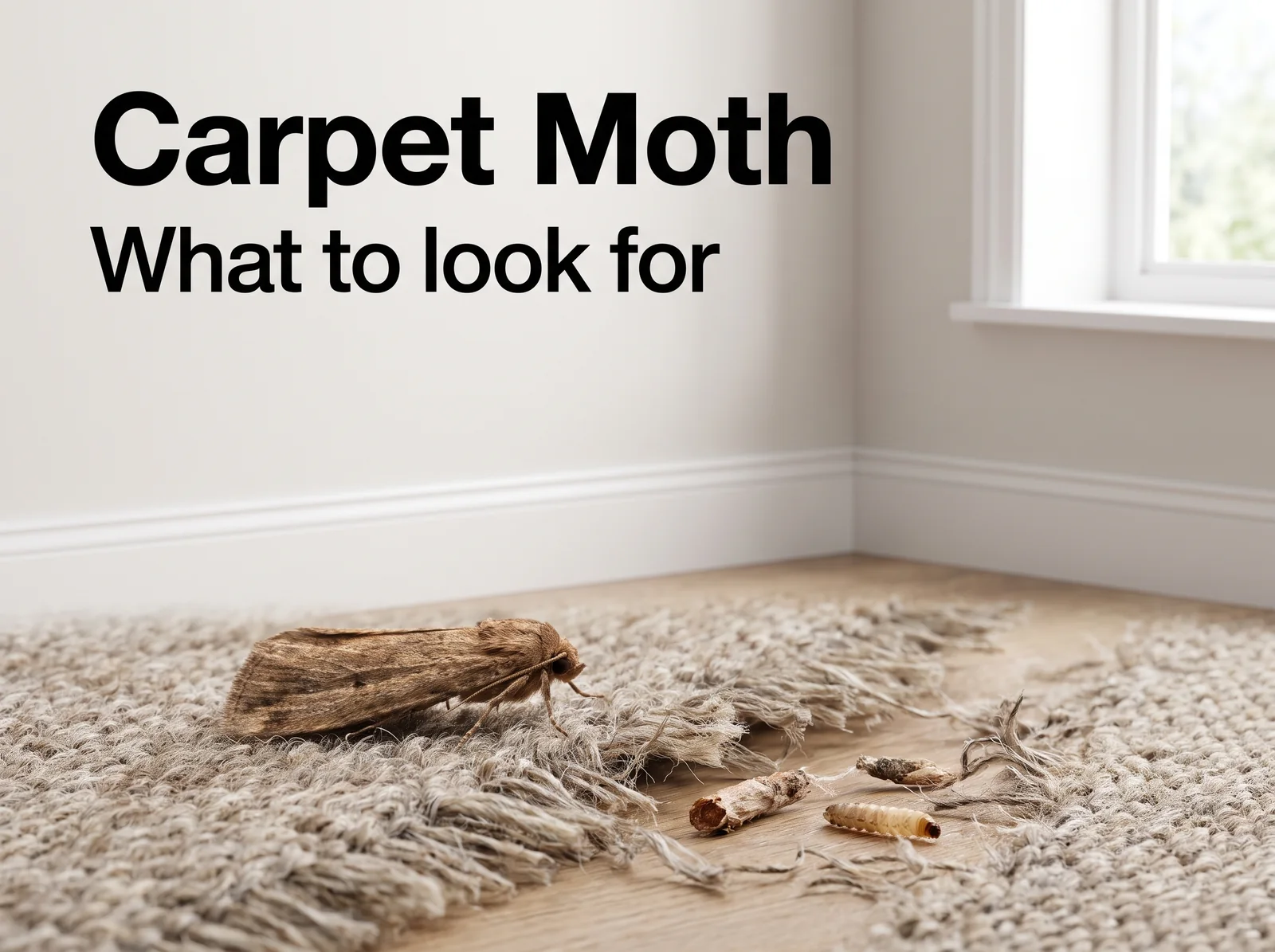
A thorough inspection requires moving furniture away from the walls and checking fiber conditions with a bright flashlight. Look for threadbare patches, loose pile, tiny white silken cases, or fine webbing that resembles cobwebs across your rug backing.
Pay special attention to natural animal fibers like wool, silk, cashmere, and feathers. Check under sofas, behind bookcases, along room perimeters, and inside wardrobe corners to locate the highest concentration of larval activity.
- Inspect the underside of woven area rugs and edges near tack strips.
- Check felt pads on chair legs and piano hammers for feeding marks.
- Look for granular frass that resembles sand matched to the carpet color.
How does deep vacuuming break the life cycle?
Vacuuming serves as your most effective physical control method for carpet moths. Suction pulls up fragile eggs, feeding larvae, pupal cocoons, and the hair or dander that sustains them. Standard surface passes are not enough to clear embedded insects.
Use a crevice tool to pull debris from edge tracks, baseboard seams, and radiator bases. Work slowly in overlapping strokes, especially across quiet corners. Once finished, seal your vacuum bag inside a plastic trash sack and remove it to an outdoor bin immediately.
How should you treat and clean infested textiles?
Textiles showing signs of moth activity need immediate isolation and temperature treatment. Heat and extreme cold kill all life stages, including microscopic eggs that survive gentle dusting. Wash launderable woolens and blended fabrics in hot water, or run them through a warm dryer cycle if the fabric allows.
For delicate rugs and dry-clean-only items, professional dry cleaning dissolves larvae and food residues through solvent action. Alternatively, place small woolen items in sealed plastic bags and freeze them for at least one week at sub-zero temperatures to destroy hiding pests.
What role do pheromone traps play in long-term control?
Pheromone traps attract male moths using synthetic scent cues, helping you track population levels without adding chemicals to your living space. While sticky traps alone will not eradicate an infestation, they reveal whether breeding adults are still active after your cleaning efforts.
Place traps in dim areas near the floor, away from drafts and open windows. Check the sticky pads weekly to count captures. A drop in numbers indicates your sanitation efforts are working, while fresh catches point to an uncleaned breeding zone nearby.
When should you consider EPA-registered treatments?
If heavy damage spreads across fitted wall-to-wall carpeting, targeted spot treatments can supplement physical cleaning. Choose an EPA-registered product specifically labeled for indoor carpet moth control, and apply it strictly according to the package directions along carpet perimeters.
Avoid broad, unguided spraying over living spaces. Insecticides cannot replace thorough cleaning because they do not remove the hair, food crumbs, and organic matter that attract future moths. Treat only after vacuuming and lifting furniture away from the walls.
How do you protect natural fibers from future attacks?
Permanent prevention relies on eliminating quiet, dirty environments where moths feel safe laying eggs. Clean carpets and rugs regularly, especially in low-traffic rooms, under stationary cabinets, and behind hanging drapes.
Store off-season wool blankets, clothing, and rugs in airtight plastic containers or vacuum-sealed garment bags. Always wash or dry-clean fabrics before long-term storage, as sweat, skin oils, and food spots make textiles far more attractive to egg-laying moths.
- Rotate area rugs periodically to expose dark edges to natural light.
- Brush pet hair off carpet edges and upholstery corners frequently.
- Install tight door sweeps and window screens to reduce insect entry.
Questions you may still have
Can carpet moths live on synthetic carpets?
Carpet moth larvae cannot digest synthetic nylon or polyester fibers. However, they can live inside synthetic carpets if the pile contains trapped pet hair, human dander, food spills, or wool blends. Larvae will chew through synthetic threads simply to reach the organic debris caught underneath.
How long do carpet moth eggs take to hatch?
Carpet moth eggs generally hatch within one to two weeks in warm, humid conditions. In cooler rooms, hatching may take up to a month. Because eggs are tiny and glued to fiber bases, regular suction and heat treatments are necessary to catch them before they turn into feeding larvae.
Does steam cleaning kill carpet moths permanently?
Steam cleaning delivers high heat that destroys carpet moth eggs and larvae on contact. However, it will not prevent future infestations on its own. You must ensure the carpet dries thoroughly afterward, as residual moisture combined with organic dust creates an inviting environment for new moths.