How do you identify a carpet moth infestation?
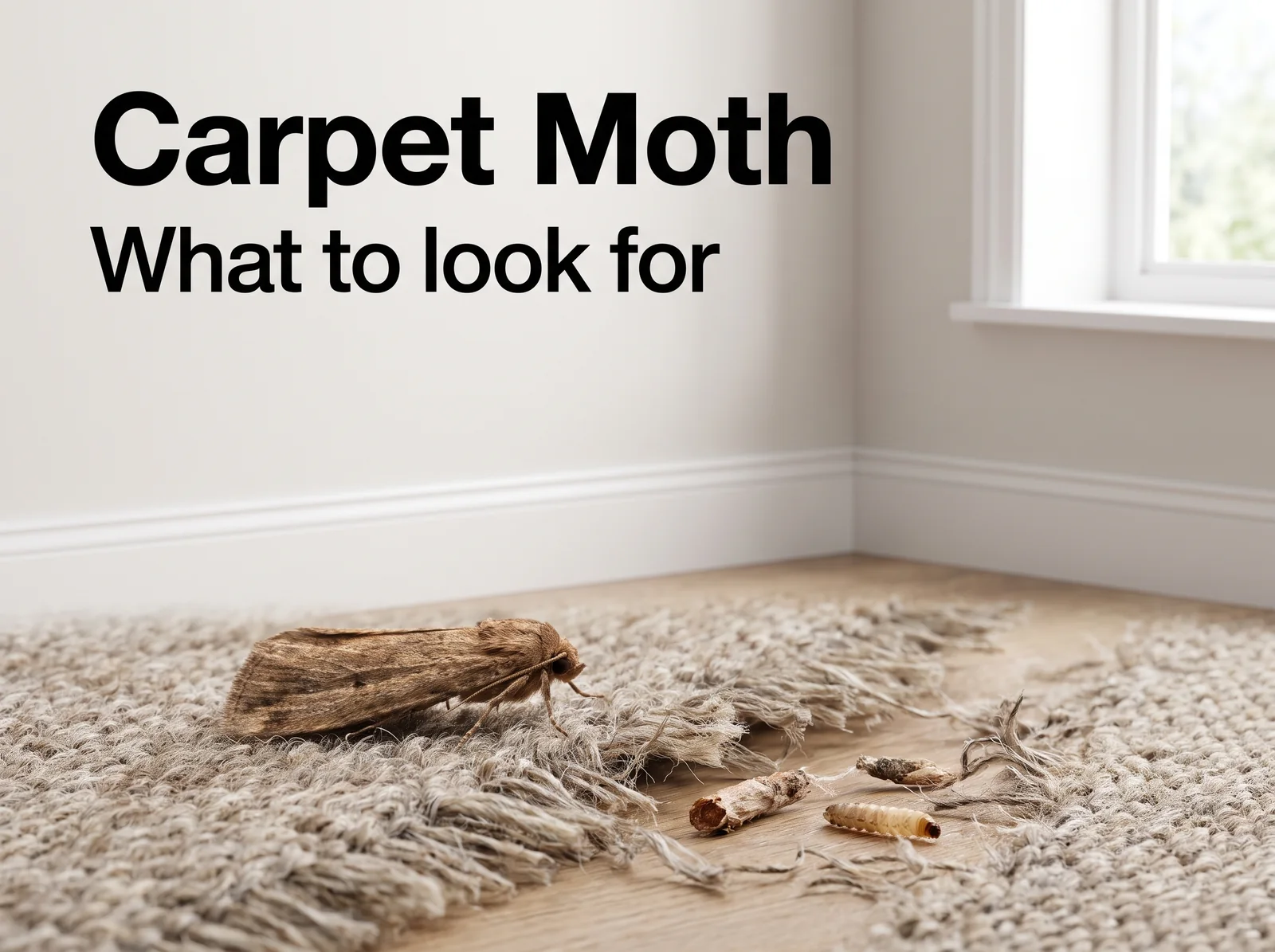
Adult carpet moths are small, buff or tan-colored insects that typically measure less than half an inch across. Unlike food pests that fly directly toward bright lamps, these moths prefer dark, undisturbed spots and tend to scurry across flooring rather than fly when disturbed.
The real damage comes from the larvae, which feed on keratin found in natural animal fibers like wool, silk, feathers, and animal hair. Look for irregular bare patches on carpets, silken webbing tubes, or small granular droppings that resemble fine sand along your floor edges.
- Threadbare patches under heavy furniture or along baseboards
- Small, rice-sized cocoon cases stuck to floor fibers
- Tiny cream-colored caterpillars crawling along rug backing
Where should you look for hidden larvae?
Carpet moth larvae thrive in quiet, dark spaces where foot traffic is low and vacuum cleaners rarely reach. You should move heavy furniture away from the walls to inspect the pile underneath sofas, bookcases, and entertainment units.
Do not forget to check the edges of wall-to-wall carpeting, especially near heating vents and behind long curtains. If you have pet fur accumulating in hidden corners or under floorboards, larvae can use that hair as a constant food source even if your primary rugs are synthetic.
What is the best vacuuming strategy to eliminate them?
A standard surface pass with an upright vacuum will not solve a carpet moth problem. You need to use a crevice tool and apply firm suction directly along floor edges, under baseboards, and deep into the carpet pile to lift out eggs and larvae.
Vacuum both the top and the underside of area rugs if possible, paying close attention to the perimeter seams and fringe. Once you finish, immediately seal the vacuum bag in a plastic trash bag and discard it in an outdoor bin so captured insects cannot crawl back inside your home.
How do you treat infested fabrics and removable rugs?
Temperature extremes provide a reliable, chemical-free way to destroy all life stages of the pest. For washable textiles, blankets, or small rugs, run them through a hot wash cycle followed by at least thirty minutes in a warm dryer.
For delicate wool items that cannot tolerate hot water, seal them inside airtight plastic bags and place them in a home freezer set to zero degrees Fahrenheit for at least four days. Alternatively, professional dry cleaning uses solvents and heat that reliably kill larvae and eggs without shrinking natural fibers.
How do pheromone traps help manage the problem?
Pheromone traps use species-specific scents to lure and capture adult male moths on a sticky surface. While these traps do not catch the larvae that cause fiber damage, they provide an immediate indicator of adult activity and help disrupt the mating cycle.
Place traps in low-light areas near floor level rather than high on shelves. Check the sticky pads weekly to see if numbers are decreasing over time, which confirms whether your cleaning efforts are successfully reducing the population.
When should you consider insecticide treatments?
If heavy damage persists across large carpeted rooms after deep cleaning and sanitation, you may need a targeted residual treatment. Focus these efforts strictly on cracks, baseboard edges, and underneath stationary furniture rather than broad, open living spaces.
Always choose an EPA-registered product explicitly labeled for indoor fabric or carpet insect control. Apply the material strictly according to the packaging instructions, and ensure all treated areas dry completely before allowing household members to return.
How do you prevent carpet moths from returning?
Prevention relies on regular cleaning routines that make your home inhospitable to fabric pests. Make it a habit to vacuum beneath heavy furniture at least once a month and promptly clean up pet hair from corners and closets.
Store seasonal wool blankets, antique textiles, and winter clothing in sealed, airtight plastic containers rather than open cardboard boxes. Inspect second-hand rugs, upholstered furniture, and vintage clothing carefully before bringing them into your living space.
Questions you may still have
Can carpet moths survive on synthetic rugs?
Larvae cannot digest pure synthetic fibers like nylon or polyester, but they can still attack blended fabrics containing wool. They will also graze on synthetic carpets if the pile is soiled with food spills, sweat, pet dander, or shed hair that provides enough protein for larvae to survive.
How long does it take to fully clear an infestation?
Because the life cycle spans several weeks to months depending on indoor temperature, eradication usually takes four to eight weeks of consistent cleaning. Regular vacuuming and ongoing monitoring with pheromone traps ensure you eliminate newly hatched larvae before they reach reproductive maturity.
Do cedar blocks or lavender sachets kill carpet moth larvae?
Natural repellents like cedar and lavender contain aromatic oils that may deter adult moths from entering small, confined spaces, but they do not kill existing larvae or eggs. Relying on scents alone will not resolve an active infestation in your floor coverings.