What signs indicate a carpet moth problem in UK homes?
Carpet moths leave distinct clues long before you notice adult moths flying around your rooms. The primary evidence includes patchy or threadbare areas in wool carpets, particularly under heavy furniture, behind long curtains, or along baseboards. Adult moths avoid bright light and prefer dark, undisturbed corners where they can lay eggs safely.
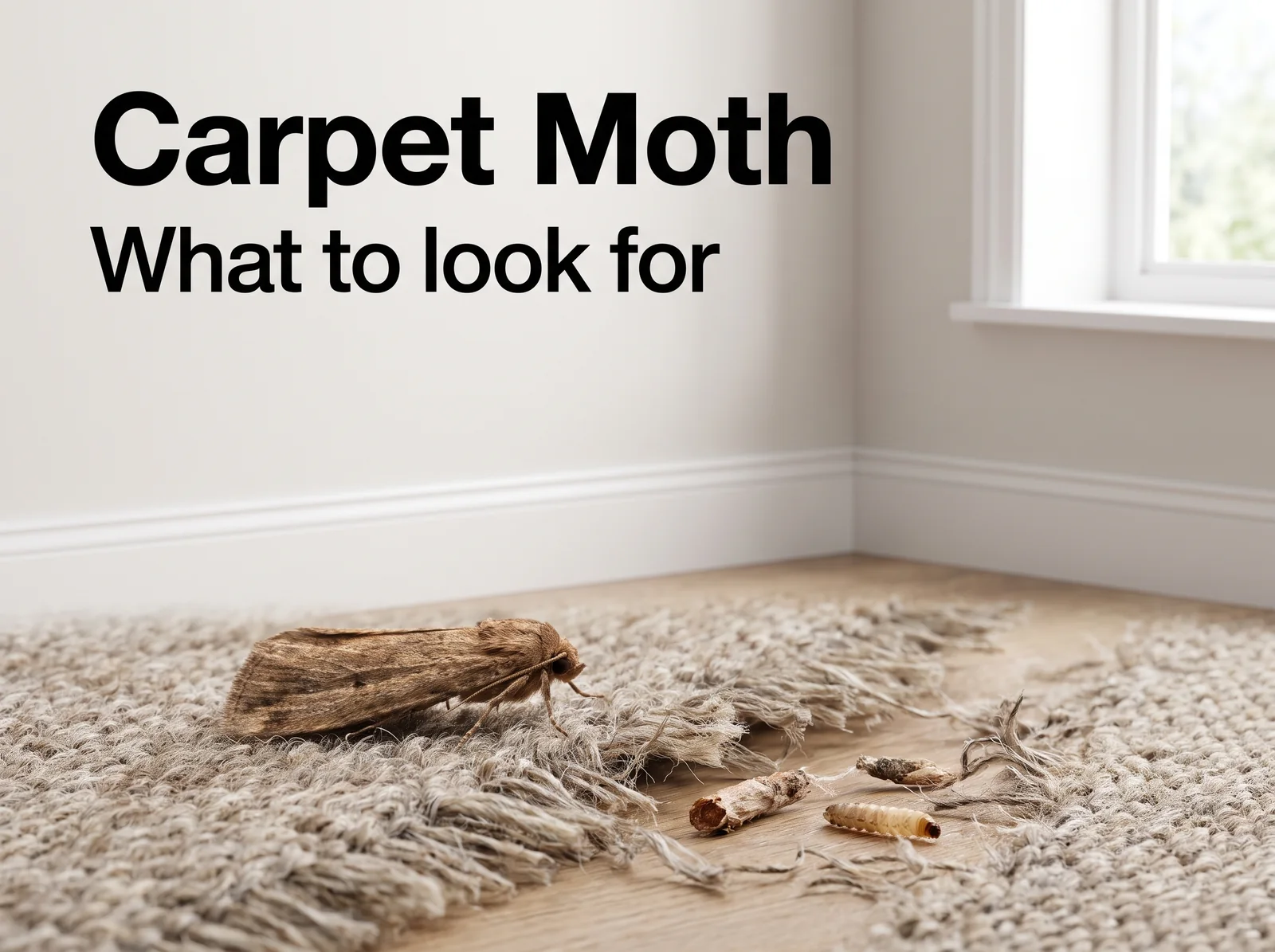
You may also spot small, silken tubes or cases spun by the larvae as they feed across the fibers. These cases often blend into the carpet color because larvae incorporate chewed fibers into their webbing. Fine, sand-like droppings known as frass are another clear indicator that an active population is feeding on your flooring.
- Threadbare spots along dark baseboards and under sofas
- Silken larval cases clinging to carpet pile
- Granular frass scattered beneath infested fibers
Why are carpet moths common across Britain?
British homes often provide an ideal environment for carpet moths due to modern central heating and widespread use of wool-blend carpets. Traditional masonry homes with fitted carpeting create warm, stable indoor climates that allow larvae to remain active throughout the entire year rather than going dormant in winter.
High humidity levels in older British properties can also encourage larval development. When natural fiber carpets collect household dust, pet hair, and skin flakes, they turn into rich feeding grounds. Even small amounts of food residue or organic spills will attract female moths looking for high-protein egg-laying sites.
How do you inspect your rooms for active larvae?
A thorough inspection requires moving heavy furniture away from walls to expose hidden floor space. Focus your attention on dark recesses under wardrobes, behind sofas, beneath radiators, and inside fitted closets. Larvae rarely live in high-traffic center areas where regular foot traffic disturbs them.
Use a strong torch to examine the base of the carpet pile near the edges. Pull up a loose corner of the carpet if possible, checking the backing and underlay for webbing or live caterpillars. Do not forget to inspect wool felt underlays, which can support massive hidden populations beneath seemingly undamaged top carpets.
What is the best vacuuming technique to remove eggs?
Regular, aggressive vacuuming is your most effective mechanical tool against carpet moths. Use a vacuum with strong suction and a motorized brush head for open areas, but switch to a narrow crevice tool for the edges. Run the attachment firmly along every skirting board and deep into the seams where carpet meets wall.
Take your time and vacuum slowly in multiple directions to lift embedded larvae and delicate eggs out of the pile. As soon as you finish, empty your vacuum canister directly into an outside bin or seal the disposable vacuum bag inside a plastic sack to keep captured insects from escaping back into your living spaces.
- Press crevice tools directly into the gap along skirting boards
- Vacuum slowly across multiple angles to dislodge hidden eggs
- Empty canisters or bags immediately into an outdoor bin
Can temperature treatments eliminate moths from rugs and textiles?
Temperature extremes provide a reliable way to kill all life stages of carpet moths without chemicals. For removable items like wool rugs, blankets, or vintage tapestries, dry cleaning is an excellent option because the professional heat and solvent process eliminates eggs and larvae completely.
You can also use freezing temperatures for smaller infested textiles. Seal items inside airtight plastic bags and place them in a home freezer set to minus eighteen degrees Celsius for at least two weeks. For carpets that cannot be moved, professional hot-water extraction steam cleaning can kill larvae if the heat penetrates deeply into the pile.
How do monitoring traps help track your progress?
Pheromone traps are valuable tools for monitoring adult male moth activity in your home. Place sticky box traps on the floor near suspected breeding sites, away from direct sunlight and drafts. While these traps do not catch female moths or larvae, they show you whether active breeding is still occurring in specific rooms.
Check your traps weekly to record catch numbers. A steady decline in adult moth captures indicates that your cleaning and sanitation efforts are breaking the reproductive cycle. If trap counts suddenly spike after several quiet weeks, re-inspect nearby baseboards and furniture to find and remove any overlooked larval pockets.
How can you protect your carpets from future infestations?
Preventing future carpet moth damage relies on consistent housekeeping and removing potential food sources. Move furniture periodically to vacuum underneath, and keep room humidity low by improving ventilation or running a dehumidifier during damp UK autumn and winter months. Clean spills immediately, as organic residue attracts breeding females.
Store seasonal woolens, spare rugs, and natural fiber blankets in sealed plastic storage tubs rather than cardboard boxes or fabric bags. Inspect any second-hand wool furniture, antique rugs, or vintage clothing thoroughly before bringing them into your home to ensure you do not accidentally introduce a new moth population.
Questions you may still have
Can carpet moth larvae damage synthetic carpets?
Pure synthetic fibers like nylon and polypropylene do not contain keratin, so moth larvae cannot digest them. However, larvae will eat wool-synthetic blends, and they may chew through synthetic carpet to reach natural hair, skin cells, or food spills trapped inside the weave.
How long does a UK carpet moth infestation take to clear?
Clearing an infestation usually takes between four to eight weeks of consistent cleaning and monitoring. Because eggs hatch over several weeks depending on room warmth, you must maintain regular crevice vacuuming and inspection routines to catch newly emerged larvae before they mature.
Should you replace the underlay when treating carpet moths?
If you have traditional wool-felt or animal-hair underlay, replacing it is often necessary during a severe infestation. Larvae readily feed on hidden felt underlay, making total eradication difficult without lifting the carpet to remove and replace the contaminated padding beneath.